It was November, the kind of November where the wind doesn’t just blow—it attacks. I remember standing in my kitchen at 6:30 PM, staring at a grocery list that felt impossible. My partner had just come home from a double shift, my kids were cranky from being cooped up inside, and I had zero energy to stand over a hot stove for two hours. The last thing I wanted to do was chop onions, sear meat, and babysit a pot. I just wanted dinner to happen while I existed in the same room.
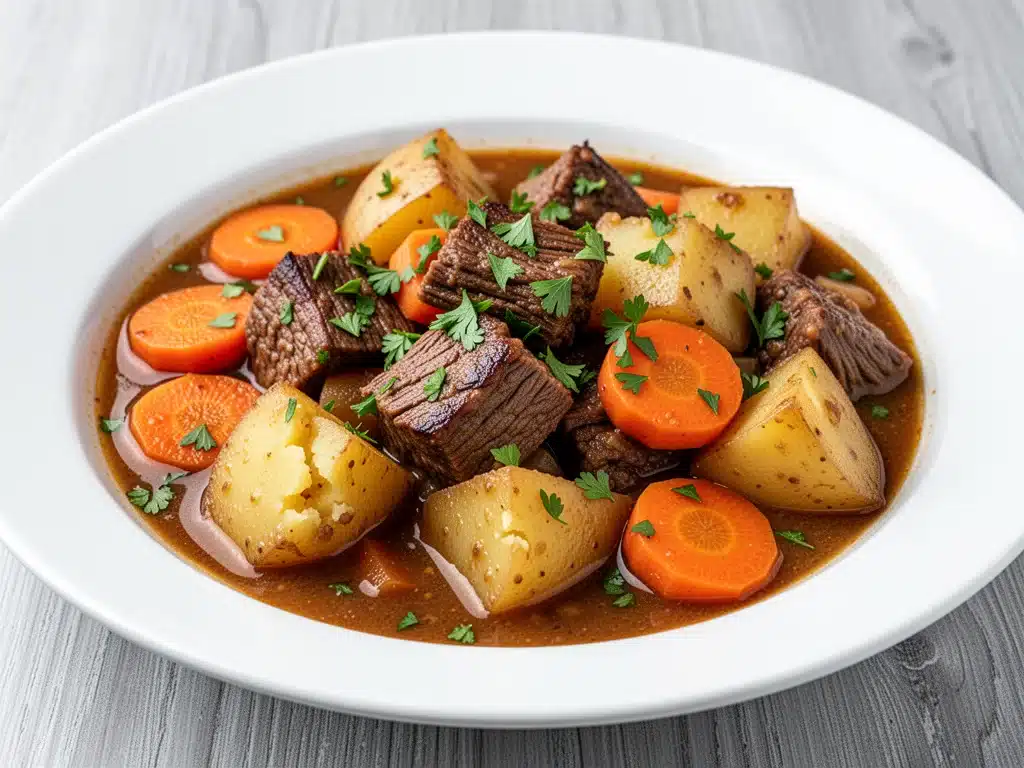
So I threw everything into the slow cooker. I didn’t have a recipe. I just had a chuck roast, some sad-looking carrots from the crisper drawer, potatoes that had seen better days, and a jar of beef broth that was half-empty. I set it to low and went to bed. The next morning, I woke up to the smell of comfort. It smelled like my childhood, like my mom’s kitchen, but better. The meat was falling apart. The potatoes had turned into creamy pillows. The sauce was rich and dark.
I served it up, and my partner took one bite and sighed the kind of sigh that means “I’m home.” That was the moment I realized that slow cooker beef stew isn’t just a recipe—it’s a lifestyle hack for tired humans. It’s the culinary equivalent of a warm hug.
I’ve made this slow cooker beef stew probably 50 times since that night. Sometimes I add red wine. Sometimes I skip the wine and add a splash of soy sauce for umami. Sometimes I forget the thyme. But the core method never changes: tough meat, slow heat, and patience. This isn’t just “easy” dinner; it’s the best way to turn cheap, tough cuts of beef into something that tastes like you spent all day simmering it on the stove. And the best part? You can basically do it with your eyes closed.
Why You’ll Love This Slow Cooker Beef Stew
There are a million stew recipes out there. Why this one? Because it actually works when you’re busy. It’s not about fancy techniques or ingredients you have to drive to three different stores to find. It’s about reliable, hearty, soul-warming food that feeds a family without breaking the bank or your back.
- Set It and Forget It (Mostly) — Real talk: you still have to chop veggies and sear the meat. But the actual cooking? That’s just waiting. You can go to work, pick up the kids, or just nap. The stew does the work. I’ve made this on days when I was too sick to stand up, and it still turned out perfect.
- Tough Meat Turns Tender — This is the secret. We use chuck roast, which is cheap and tough. If you cook it on high for 4 hours, it’s rubber. But in the slow cooker on low for 8 hours? It shreds apart with a fork. It’s magic. You get restaurant-quality texture without the restaurant price tag.
- Pantry Staples Only — You probably have 90% of this already. Beef broth, carrots, potatoes, onions, garlic, flour, tomato paste. That’s it. If you have a jar of spices in your cabinet, you’re golden. No weird ingredients I’ve never heard of.
- Leftovers Taste Better — Stew is one of those foods that gets better the next day. The flavors meld together overnight. I usually make a double batch because I know the leftovers will be my lunch for the next three days. It reheats beautifully in the microwave.
- Freezer Friendly — Made too much? Freeze it. This freezes beautifully for up to 3 months. It’s my go-to “emergency dinner” when I forgot to thaw something or don’t feel like cooking.
This is the recipe I make when I need dinner to just work. It’s comforting, filling, and makes your house smell amazing. My kids, who usually pick out the carrots, ask for seconds. That’s the highest praise I can give.
Ingredients You’ll Need
Here’s the thing about this slow cooker beef stew: the quality of your ingredients matters more than you think. Since there aren’t a ton of them, each one has a job to do. I’m not going to lie to you and say you can use anything. Here’s what I use and why.
For the Meat
Chuck roast (2-3 pounds / 900g-1.4kg) — This is non-negotiable. Do not use sirloin. Do not use lean beef. You need the fat marbling in chuck roast. The fat renders down during the long cook, keeping the meat moist and adding flavor. If you can’t find a whole roast, ask your butcher to cut it into 2-inch cubes. I buy the biggest one I can find on sale.
For the Veggies
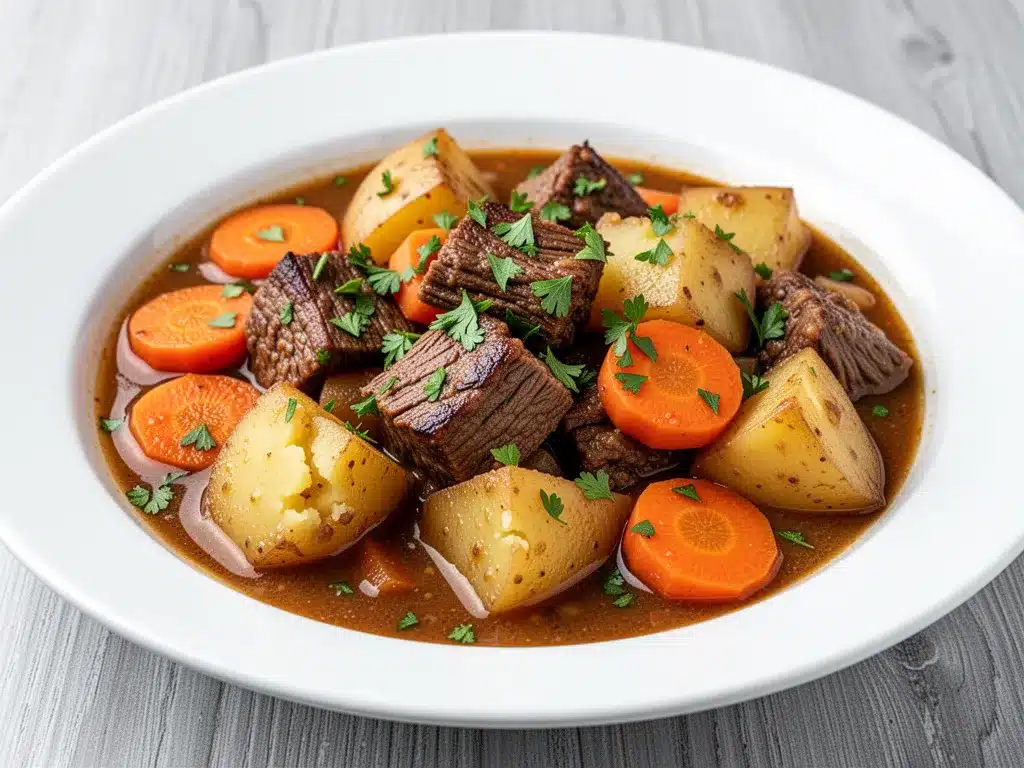
Yellow onions (2 large, chopped / about 300g) — I use yellow because they get sweet and soft when cooked. White onions are too sharp. Sweet onions are too watery. Yellow is the gold standard for stew.
Carrots (4-5 large, peeled and chopped / about 400g) — Use big, sturdy carrots. Baby carrots fall apart too much. I chop them into thick chunks so they hold their shape. If you’re like me and your family hates carrots, you can use parsnips. They taste similar but are sweeter.
Red potatoes (1.5 pounds / 700g, cubed) — Red potatoes are waxy, which means they don’t turn to mush in the slow cooker. Yukon Golds work too, but russets will disintegrate. I leave the skins on for extra fiber and rustic look, but peel them if you prefer.
For the Broth & Flavor
Beef broth (32 ounces / 950ml) — I use low-sodium broth because I want to control the salt. If you use regular broth, taste it before adding extra salt at the end. Good quality broth makes a huge difference. I like Swanson or Pacific, but whatever is on sale works.
Tomato paste (2 tablespoons) — This adds depth and richness, not just tomato flavor. It’s the secret ingredient that makes the sauce taste “meaty.” Don’t skip it.
Red wine (½ cup / 120ml) — I use a dry red like Cabernet Sauvignon or Merlot. You don’t need expensive wine, but don’t use “cooking wine” from the vinegar aisle. If you don’t drink alcohol, substitute with extra beef broth plus a splash of balsamic vinegar for acidity.
Worcestershire sauce (1 tablespoon) — This adds that savory umami punch. It’s subtle but essential. Heinz is the standard.
Garlic (4 cloves, minced / about 1 tablespoon) — Fresh garlic only. Jarred garlic has a weird metallic taste that really shines in a simple stew. Mince it yourself. It takes 30 seconds.
Dried thyme (1 teaspoon) — Thyme is the classic herb for beef. Fresh thyme works too, but add it at the end so it doesn’t get bitter. I usually keep dried thyme stocked because it lasts forever.
Bay leaf (1 leaf) — Just one. Throw it in, take it out before serving. It adds a subtle floral note. Don’t eat the leaf; it’s tough.
Salt and black pepper — To taste. I usually add most of the pepper when searing the meat.
For Thickening
All-purpose flour (3 tablespoons) — I use this to coat the meat before searing and to make a slurry later if needed. It helps thicken the sauce naturally.
Equipment Needed
You don’t need fancy gadgets for this. Here’s what I actually use.
Slow cooker (6-quart) — I have a Crock-Pot that’s seen better days, but it works fine. Make sure it’s at least 6 quarts. If it’s too small, the stew will overflow. If it’s too big, the veggies won’t submerge in the liquid properly.
Large skillet — I use a 12-inch cast iron skillet for searing the meat. Cast iron holds heat well, which gives a better sear. Stainless steel works too. Non-stick is okay, but you might not get as nice a crust.
Sharp chef’s knife — For chopping veggies and cutting the roast. A dull knife is dangerous and frustrating. I use my Wüsthof, but a $20 knife from IKEA is fine if it’s sharp.
Wooden spoon — For stirring. Silicone is fine too. Don’t use metal on cast iron if you’re trying to preserve the seasoning.
Measuring cups and spoons — Standard stuff. Dollar store versions work.
Slotted spoon — For transferring the meat from the skillet to the slow cooker. Keeps the excess grease out.
How to Make It: Step-by-Step
Alright, let’s make this! I’m walking you through exactly how I do it, including the little tricks I’ve picked up over the years. This process takes about 20 minutes of active work, and then the slow cooker does the rest.
Step 1: Prep the Meat (5 minutes)
Cut the chuck roast into 1.5 to 2-inch cubes. You want them uniform so they cook evenly. Pat them dry with paper towels. This is crucial—wet meat steams instead of sears. Toss the cubes with 2 tablespoons of flour, salt, and pepper. The flour helps thicken the sauce later and gives the meat a nice coating.
Step 2: Sear the Beef (10 minutes)
Heat 1 tablespoon of oil in your large skillet over medium-high heat. You want the oil shimmering but not smoking. Add the beef cubes in a single layer. Do not overcrowd the pan! If you do, the meat will steam and turn gray instead of browning. Sear in batches. Let the meat sit undisturbed for 2-3 minutes until a dark crust forms. Flip and sear the other side. Transfer the browned meat to the slow cooker. This step takes time, but it’s what gives the stew its deep, rich flavor. Don’t skip it.
Step 3: Sauté the Aromatics (3 minutes)
In the same skillet, add a little more oil if needed. Toss in the chopped onions and carrots. Cook for 3-4 minutes, stirring occasionally. You don’t need to cook them through, just soften them a bit and get them smelling good. Add the minced garlic and tomato paste. Cook for 1 more minute, stirring constantly. The garlic burns fast, so watch it closely.
Step 4: Deglaze and Combine (2 minutes)
Pour in the red wine (or broth substitute) to deglaze the pan. Scrape up all those brown bits stuck to the bottom of the skillet—that’s pure flavor. Pour this liquid mixture over the meat in the slow cooker. Add the beef broth, Worcestershire sauce, thyme, and bay leaf. Stir everything together gently.
Step 5: Add the Potatoes and Cook (8 hours)
Add the cubed potatoes to the slow cooker. They should be mostly submerged in the liquid. If they’re sticking out, add a splash more broth. Cover and cook on LOW for 8 hours. Do not cook on HIGH for 8 hours; the meat will be tough. If you’re in a rush, you can cook on HIGH for 4-5 hours, but the texture won’t be quite as tender. I always choose low and slow.
Step 6: Thicken and Serve (5 minutes)
After 8 hours, check the meat. It should be fork-tender. If it’s not, cook for another hour. Remove the bay leaf. If the stew looks too watery, mix 1 tablespoon of flour with 2 tablespoons of cold water to make a slurry. Stir it into the stew, cover, and cook on HIGH for 30 more minutes to thicken. Usually, it thickens on its own, but this is your backup plan. Taste and adjust salt and pepper. Serve hot with crusty bread.
Expert Tips & Tricks
Here’s everything I’ve learned from making this dozens of times. These tips will save you from my mistakes.
Don’t Skip the Sear
I know it’s an extra step. I know you’re tired. But searing the meat creates the Maillard reaction, which adds depth and complexity. Unseared stew tastes flat and boiled. Searing makes it taste like a restaurant dish. It’s worth the 10 minutes.
Use Low-Sodium Broth
Slow cookers reduce liquid over time, concentrating the salt. If you start with high-sodium broth, your stew will be inedibly salty by the end. Low-sodium gives you control. You can always add salt at the end, but you can’t take it out.
Add Veggies at the Right Time
Carrots and potatoes hold up well in the slow cooker. But if you add delicate veggies like peas or zucchini, add them in the last 30 minutes. They’ll turn to mush if you cook them for 8 hours. I usually add frozen peas right before serving.
The Slurry Trick
If your stew is too thin, don’t just add more flour directly to the pot—it’ll clump. Make a slurry first. Mix cornstarch or flour with cold water until smooth, then stir it in. It’s the only way to get a smooth, thick sauce.
Make It Ahead
You can prep all the veggies and sear the meat the night before. Store them in separate containers in the fridge. In the morning, dump them into the slow cooker and add the liquids. Dinner is ready when you get home.
Variations & Substitutions
Once you’ve nailed the basic version, here’s how you can mix it up. I’ve tried all of these.
Gluten-Free
Use gluten-free beef broth and substitute the flour with cornstarch or a gluten-free flour blend. Make sure your Worcestershire sauce is GF (some brands contain malt vinegar). I use Barilla GF pasta if I serve it over noodles.
Vegetarian
Swap the beef for hearty mushrooms (like cremini or portobello) and add a can of diced tomatoes for umami. Use vegetable broth. It’s not the same, but it’s still delicious and filling.
Spicy
Add a teaspoon of cayenne pepper or a diced jalapeño with the onions. Top with hot sauce when serving. This is great if you like a kick.
Herb-Forward
Add fresh rosemary or sage along with the thyme. Fresh herbs add a bright, piney flavor that pairs beautifully with beef. Add them in the last hour of cooking.
With Noodles
Instead of serving with bread, serve this over egg noodles or mashed potatoes. I love it over creamy mashed potatoes—the sauce soaks into the potatoes perfectly.
Serving & Storage
How to Serve:
I usually serve this straight from the slow cooker with a big slab of crusty sourdough bread on the side. But here are other ways I’ve enjoyed it:
- Mashed Potatoes: A classic pairing. The stew is the gravy.
- Egg Noodles: Toss the noodles with a little butter and top with stew.
- Crusty Bread: For dipping. Essential.
- Green Salad: A simple arugula salad with lemon vinaigrette cuts through the richness.
Storage:
Store leftovers in an airtight container in the fridge for up to 4 days. The flavors actually get better after a day or two.
Reheating:
Reheat gently on the stove over low heat, adding a splash of broth if it’s too thick. Microwave works too, but stir frequently to avoid hot spots. The stew thickens in the fridge, so don’t panic if it looks like a brick when you open the container.
Freezing:
This freezes beautifully for up to 3 months. Let it cool completely, then transfer to freezer bags or containers. Leave some headspace for expansion. Thaw in the fridge overnight before reheating. The potatoes might get a little soft, but they’re still edible.
Nutrition Information
I’m not a nutritionist, but here’s the breakdown if you’re tracking. Note that this is an estimate based on standard ingredients.
| Per Serving (approx. 1.5 cups) | Amount |
|---|---|
| Calories | 450 |
| Protein | 35g |
| Carbs | 30g |
| Fiber | 4g |
| Fat | 18g |
| Sodium | 650mg |
What’s Good: High protein from the beef. Good fiber from the veggies. Iron-rich from the beef and greens if you add spinach.
What to Know: Higher in sodium if you use regular broth. Contains gluten if you use regular flour. Can be made lighter by using leaner cuts, but you lose texture.
Final Thoughts
So that’s my go-to slow cooker beef stew! I’ve probably talked your ear off at this point, but when you make a recipe this often, you have a lot to say about it. This has saved weeknight dinners more times than I can count. It’s my answer to “what’s for dinner” when I’m tired, don’t want takeout, and still want something that tastes really good.
Make it yours! Try different veggies, swap the wine for beer, or add a splash of soy sauce. The best recipes are the ones you adapt to your family’s tastes. If you make this, drop a comment and let me know what you think! I love hearing how recipes turn out in your kitchen. And if something doesn’t work, tell me that too—I’m here to help troubleshoot.
Happy cooking! And I hope your kitchen smells half as good as mine does right now.
Frequently Asked Questions
Can I use a different cut of meat?
You can, but chuck roast is best. Sirloin or round roast will be leaner and tougher. If you use those, cook on low for fewer hours (4-5) or you’ll end up with chewy beef. Short ribs are amazing too, but they’re expensive. Chuck is the sweet spot for price and texture.
Why is my stew watery?
Slow cookers don’t evaporate liquid like stovetop cooking. If your stew is too thin, use the slurry trick (cornstarch + water) and cook on high for 30 minutes. Or, just leave the lid off for the last hour to let it reduce. Also, check that you didn’t add too much broth.
Can I put raw veggies in the slow cooker?
Yes! That’s the whole point. Carrots and potatoes hold up well. But delicate veggies like peas, corn, or zucchini should be added in the last 30 minutes or they’ll turn to mush.
How do I store leftovers?
Let it cool to room temperature, then transfer to an airtight container. It lasts 4 days in the fridge. Reheat gently on the stove with a splash of broth.
Can I freeze this stew?
Yes, freeze for up to 3 months. The potatoes might get a little soft after thawing, but the flavor remains great. Thaw in the fridge overnight before reheating.
Pin This Recipe!
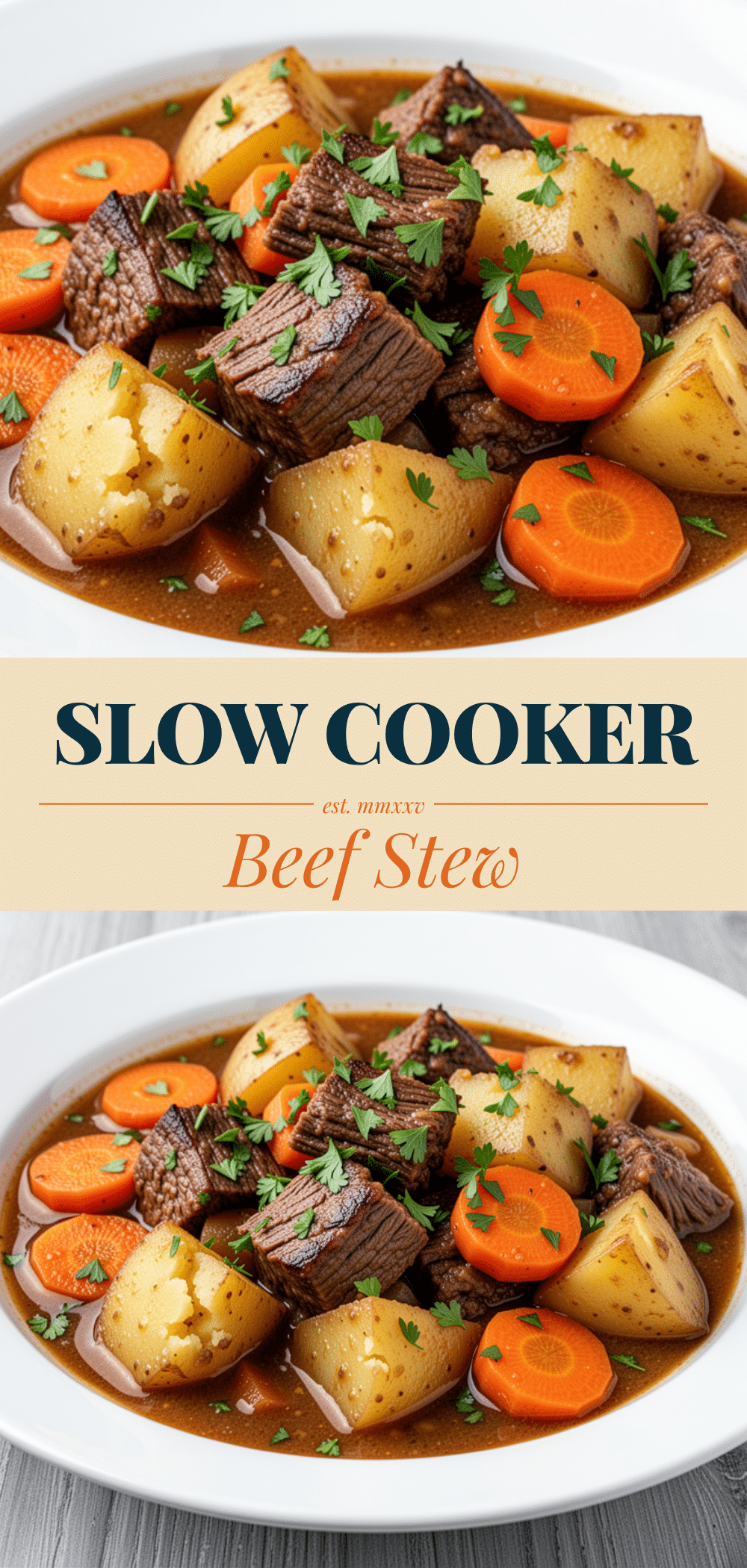
Slow Cooker Beef Stew: Easy 30-Minute Comfort Food
- Total Time: 8 hours 20 minutes
- Yield: 6 servings 1x
Description
A hearty, slow-cooked beef stew made with chuck roast, root vegetables, and pantry staples. This recipe requires minimal active prep time and delivers tender, flavorful comfort food perfect for busy weeknights.
Ingredients
- 2–3 pounds (900g-1.4kg) chuck roast, cut into 1.5-2 inch cubes
- 2 large yellow onions, chopped
- 4–5 large carrots, peeled and chopped into thick chunks
- 1.5 pounds (700g) red potatoes, cubed
- 32 ounces (950ml) low-sodium beef broth
- 2 tablespoons tomato paste
- ½ cup (120ml) dry red wine (e.g., Cabernet Sauvignon or Merlot)
- 1 tablespoon Worcestershire sauce
- 4 cloves garlic, minced
- 1 teaspoon dried thyme
- 1 bay leaf
- 3 tablespoons all-purpose flour
- Salt and black pepper to taste
- 1 tablespoon oil (for searing)
Instructions
- Cut the chuck roast into 1.5 to 2-inch cubes. Pat dry with paper towels and toss with 2 tablespoons of flour, salt, and pepper.
- Heat 1 tablespoon of oil in a large skillet over medium-high heat. Sear the beef cubes in batches until a dark crust forms on all sides (2-3 minutes per side). Transfer browned meat to the slow cooker.
- In the same skillet, sauté onions and carrots for 3-4 minutes until softened. Add garlic and tomato paste, cooking for 1 more minute.
- Pour in the red wine to deglaze the pan, scraping up browned bits. Pour this mixture into the slow cooker along with beef broth, Worcestershire sauce, thyme, and bay leaf. Stir gently.
- Add the cubed potatoes to the slow cooker, ensuring they are mostly submerged in liquid.
- Cover and cook on LOW for 8 hours (or HIGH for 4-5 hours if in a rush).
- Remove the bay leaf. If the stew is too watery, mix 1 tablespoon of flour with 2 tablespoons of cold water to create a slurry, stir it in, and cook on HIGH for 30 more minutes to thicken.
- Taste and adjust salt and pepper. Serve hot with crusty bread, mashed potatoes, or egg noodles.
Notes
[‘Do not skip searing the meat; it creates the Maillard reaction for deep flavor.’, ‘Use low-sodium broth to control salt levels, as slow cookers concentrate flavors.’, ‘Add delicate vegetables like peas or zucchini in the last 30 minutes of cooking to prevent mushiness.’, ‘Leftovers taste better the next day and freeze well for up to 3 months.’, ‘If using high-sodium broth, taste before adding extra salt at the end.’]
- Prep Time: 20 minutes
- Cook Time: 8 hours
- Category: Main Course
- Cuisine: American
Nutrition
- Serving Size: 1.5 cups
- Calories: 450
- Sodium: 650
- Fat: 18
- Carbohydrates: 30
- Fiber: 4
- Protein: 35
Keywords: slow cooker beef stew, chuck roast recipe, comfort food, easy dinner, one pot meal, winter recipes, meal prep


