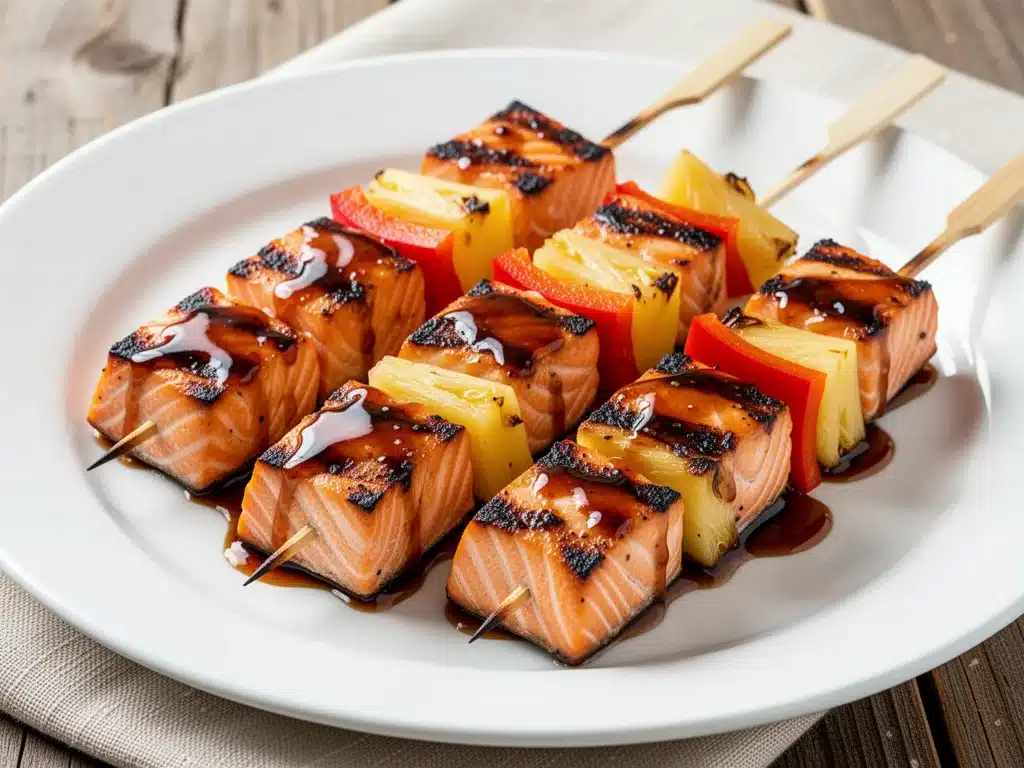
It was 4:30 PM on Saturday, and the sun was still beating down with that stubborn Labor Day heat that refuses to let summer go. I was standing in my kitchen, staring at a grill that was already preheating outside, while my inbox pinged with yet another email. My in-laws were arriving in an hour, my teenagers were somewhere in the house making noise I couldn’t quite identify, and I had absolutely no plan for dinner. The usual “what’s for dinner?” panic started to creep in. I didn’t want to order takeout (too expensive, not fresh enough), and I definitely didn’t want to be stuck at the stove for two hours while everyone else was hanging out on the patio.
That’s when I remembered the salmon I’d bought on a whim earlier that week. It was fresh, it was beautiful, and it cooked in literally twelve minutes. I grabbed some bell peppers, red onion, and zucchini, grabbed my favorite marinade ingredients, and started skewering. What happened next wasn’t just a successful dinner—it was a small miracle. The grill smoked just enough to give everything a charred, smoky flavor without burning it. The kids actually put their phones down to eat. My mother-in-law, who usually critiques everything, asked for the recipe. And the best part? We ate outside, no dishes piled up in the sink, just empty plates and happy bellies.
This is why Grilled Salmon Skewers have become my unofficial Labor Day signature dish. It’s not just because it’s easy—though it is stupidly simple. It’s because it captures the essence of late-summer grilling: fresh, bright, messy in a good way, and incredibly fast. If you’re looking for a Labor Day dinner idea that doesn’t involve hours of prep or a dining room full of formal chairs, this is it. I’ve made these skewers at least six times this summer alone, tweaking the marinade and veggies until they were perfect. Trust me, once you try them, you’ll be grilling them every weekend until September ends.
Why You’ll Love These Grilled Salmon Skewers
There are a million reasons to cook salmon, but skewering it? That changes the game. Here’s why this recipe has taken over our weekend routine:
Zero Stress Cooking — Seriously, if you can thread food onto a stick, you can make this. I’ve walked my teenage daughter through it over FaceTime while she was at college. There’s no delicate flipping of fillets, no worrying about the fish sticking to the grill grates. It’s sturdy, it’s forgiving, and it’s hard to mess up.
Flavor Explosion — By cutting the salmon into chunks, you maximize the surface area that touches the marinade and the grill. Every bite has that crispy, charred edge and that juicy, tender center. It’s way more flavorful than a plain baked fillet.
Perfect for Crowds — Labor Day is usually a group event, and feeding a crowd with fillets can be tricky (everyone wants the “prime” piece). With skewers, everyone gets an equal mix of fish and veggies. Plus, you can grill them in batches while chatting with guests. No standing by the grill like a guard dog.
Light and Fresh — It’s hot out. You don’t want a heavy, creamy casserole. You want something that tastes like summer. The lemon, dill, and garlic marinade cuts through the richness of the salmon, and the grilled veggies add a sweet, smoky contrast. It feels healthy but tastes indulgent.
Fast Cleanup — This is huge. Because we’re grilling, there’s no splatter on the stovetop. I just wipe down the grill grates (or use foil if I’m lazy) and throw the skewer plates in the dishwasher. Done. Ten minutes later, I’m back on the patio.
This is my go-to when I need dinner to just work. No complicated techniques, no weird ingredients, just reliable, delicious food that makes everyone happy and keeps the kitchen stress to a minimum.
Ingredients You’ll Need
Here’s the best part: you probably have most of this already. The beauty of this Grilled Salmon Skewers recipe is how few ingredients it takes to get restaurant-quality results. I’m particular about three things here, and I’ll tell you exactly why.
SALMON (2 pounds / 900g) — This is the star. I always buy center-cut salmon fillets because they’re uniform in thickness and cook evenly. Wild-caught is better for flavor, but farmed is fine if that’s what’s on sale. Look for bright red or orange flesh that smells clean, not fishy. Avoid salmon that looks dry or has white albumin protein seeping out.
BELL PEPPERS (2 medium, chopped / about 300g) — I use a mix of red and yellow for color. Red adds sweetness, yellow adds brightness. Green peppers are too bitter for this. Chop them into 1-inch chunks, roughly the same size as the salmon.
RED ONION (1 large, cut into 1-inch wedges / about 200g) — Keep the layers intact so the wedges don’t fall apart on the grill. Red onion is sweeter than white and looks gorgeous when charred. Soak the wedges in water for 10 minutes before skewering to prevent them from burning.
ZUCCHINI (1 medium, sliced into ½-inch rounds / about 150g) — Adds a nice texture contrast. Don’t slice them too thin, or they’ll turn to mush. Half-inch rounds hold up perfectly on the grill.
CHERRY TOMATOES (1 cup, whole / about 150g) — These burst with juice on the grill. It’s like little flavor bombs. Make sure they’re firm, not soft. If they’re too ripe, they’ll disintegrate.
FRESH DILL (¼ cup, chopped / about 15g) — Dill and salmon are best friends. Don’t skip it. If you hate dill, use fresh tarragon or parsley, but dill is the classic choice for a reason.
OLIVE OIL (¼ cup / 60ml) — Use extra virgin olive oil for the marinade. It adds fruitiness and helps the spices stick. Don’t use refined oil here; you want that flavor.
LEMON JUICE (3 tablespoons / 45ml) — Freshly squeezed only. Bottled lemon juice tastes metallic and flat. Cut the lemons in half and squeeze them yourself. It takes 30 seconds.
GARLIC (4 cloves, minced / about 2 tablespoons) — Fresh garlic is non-negotiable. Jarred garlic just doesn’t have the punch needed for this marinade. Mince it finely so it distributes evenly.
DIJON MUSTARD (1 tablespoon) — This is the secret ingredient. It emulsifies the marinade and adds a tangy depth that balances the oil and lemon. You won’t taste the mustard directly, but you’ll miss it if it’s gone.
HONEY (1 tablespoon) — Just a touch to balance the acidity of the lemon and mustard. Don’t add more, or it’ll burn on the grill.
SPICES (1 teaspoon each of smoked paprika, salt, and black pepper) — Smoked paprika adds that grilled flavor even if you’re not getting perfect char. Kosher salt is best because it’s less salty by volume than table salt.
SKEWERS — Wooden or bamboo skewers (soaked) or metal skewers. Wooden skewers give a rustic look but need soaking. Metal skewers are reusable and don’t need prep.
Equipment Needed
You don’t need fancy equipment for this. Here’s what I actually use.
Grill — Gas or charcoal both work. I prefer charcoal for that smoky flavor, but gas is easier for quick weeknight meals. Make sure your grates are clean and oiled to prevent sticking.
Mixing Bowls — One large bowl for the marinade, one medium for tossing the salmon.
Sharp Knife — For chopping veggies and dicing the salmon. A dull knife will crush the salmon instead of cutting it cleanly.
Cutting Board — Any size works. I use a large plastic one for easy cleanup.
Measuring Spoons — Standard stuff. Dollar store versions work fine.
Pastry Brush or Spoon — For brushing extra marinade on the skewers while grilling.
Aluminum Foil — Optional, but helpful if you’re worried about flare-ups. You can place skewers on foil packets, but direct grilling tastes better.
How to Make It: Step-by-Step
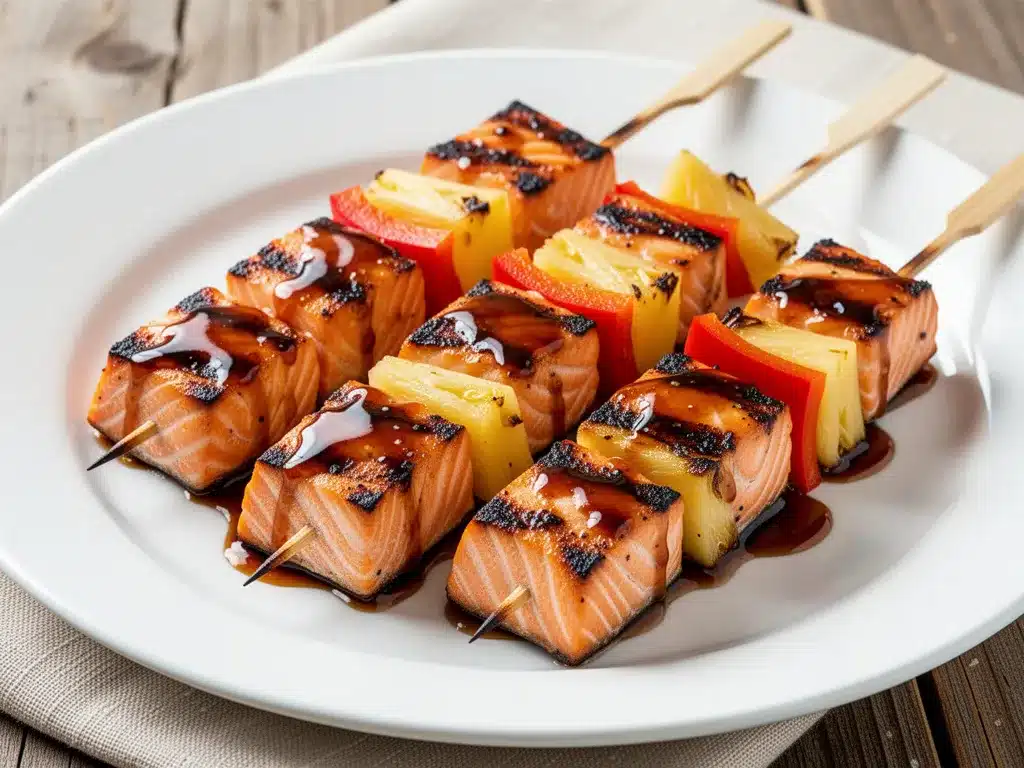
Alright, let’s make this! I’m walking you through exactly how I do it, including the little tricks I’ve picked up.
Step 1: Prep Your Skewers (5 minutes)
If you’re using wooden or bamboo skewers, soak them in water for at least 30 minutes before grilling. This prevents them from burning on the grill. I usually soak them when I start prepping the veggies so I don’t forget. If you’re using metal skewers, just wipe them clean.
Step 2: Make the Marinade (5 minutes)
In a large bowl, whisk together the olive oil, lemon juice, minced garlic, Dijon mustard, honey, smoked paprika, salt, and pepper. Whisk until the mixture is emulsified and creamy-looking. Taste it—it should be bright, tangy, and savory. If it tastes too sour, add a tiny bit more honey. If it’s too oily, add a squeeze more lemon.
Step 3: Prep the Salmon (5 minutes)
Rinse the salmon fillets under cold water and pat them completely dry with paper towels. Moisture is the enemy of a good sear. Cut the salmon into 1.5-inch cubes. Try to keep them uniform so they cook evenly. Remove any pin bones with tweezers if you missed them at the store.
Step 4: Marinate the Salmon (10-30 minutes)
Add the salmon cubes to the marinade bowl. Gently toss to coat. Let it sit at room temperature for 15-30 minutes. Don’t marinate longer than 30 minutes, or the acid in the lemon juice will start to “cook” the fish, making it mushy. This is a common mistake—less time is more with delicate fish.
Step 5: Prep the Veggies (5 minutes)
While the salmon marinates, chop your bell peppers, zucchini, and red onion. Soak the onion wedges in a bowl of cold water for 10 minutes to take the bite out of the raw onion and prevent burning. Drain and pat dry. Halve the cherry tomatoes if they’re large.
Step 6: Thread the Skewers (10 minutes)
This is the fun part. Thread the ingredients onto the skewers in an alternating pattern. A good rule of thumb is to put denser veggies (like onion and peppers) first, then salmon, then softer veggies (like zucchini and tomatoes) last. This ensures everything cooks at a similar rate. Leave a little space between pieces so heat can circulate. Don’t pack them too tight.
Step 7: Grill the Skewers (12-15 minutes)
Preheat your grill to medium-high heat (about 400°F / 200°C). Clean the grates and oil them well with a paper towel dipped in oil. Place the skewers on the grill. Cook for 3-4 minutes on the first side without moving them. This creates a nice char. Flip carefully and cook for another 3-4 minutes on the second side. If the salmon is thick, you may need an extra 2 minutes. The salmon is done when it flakes easily with a fork and is opaque throughout. Brush with extra marinade halfway through if you like a glossier finish.
Step 8: Serve
Transfer the skewers to a platter. Garnish with fresh dill and lemon wedges. Serve immediately while hot. The veggies should be tender-crisp, and the salmon should be juicy.
Total Time: About 45 minutes (15 minutes active, 30 minutes mostly hands-off marinating)
Expert Tips & Tricks
Here’s everything I’ve learned from making these dozens of times. These tips will save you from my mistakes.
Don’t Over-Marinate — I’ve ruined salmon by leaving it in lemon juice for an hour. It turns into ceviche. Stick to 15-30 minutes max. The acid breaks down the protein quickly.
Uniform Cuts — Cut your salmon and veggies into similar sizes. If one piece is huge and another is tiny, the tiny one will dry out before the big one is cooked.
Oil the Grates — Salmon sticks easily. Use a folded paper towel dipped in oil and hold it with tongs to rub the grates clean and oiled. This is non-negotiable.
Don’t Flip Too Much — Let the skewers sear. If you keep moving them, they’ll stick. Wait until they release naturally from the grate.
Check for Doneness — Salmon continues to cook after it’s off the grill. Remove it when it’s just barely opaque in the center. It’ll finish cooking on the plate.
Soak Onions — Red onions can burn quickly. Soaking them in water for 10 minutes keeps them from charring too fast and adds a milder flavor.
Use Fresh Herbs — Dried dill just doesn’t have the same bright flavor. Fresh is worth the extra trip to the store.
Marinate in a Ziploc — For less mess, put the salmon in a ziploc bag, pour in the marinade, and squish it around. It’s easier to clean up than a bowl.
Variations & Substitutions
Once you’ve nailed the basic version, here’s how you can mix it up. I’ve tried all of these.
Shrimp Skewers — Swap salmon for large shrimp. Marinate for only 15 minutes. Cook for 2-3 minutes per side. They cook much faster.
Chicken Skewers — Use chicken breast cubes. Marinate for up to 4 hours. Cook for 6-8 minutes per side. Chicken needs more time and higher heat to get a good sear.
Teriyaki Style — Swap the lemon and dill marinade for teriyaki sauce, ginger, and garlic. Add pineapple chunks for sweetness. Great for a tropical vibe.
Mediterranean — Add olives, feta cheese, and artichoke hearts. Use oregano instead of dill. Serve with tzatziki sauce.
Spicy Kick — Add red pepper flakes or a dash of hot sauce to the marinade. Top with sliced jalapeños after grilling.
Gluten-Free — This recipe is naturally gluten-free. Just check your Dijon mustard and smoked paprika labels to ensure no cross-contamination.
Dairy-Free — Naturally dairy-free. No cheese in the marinade.
Serving & Storage
How to Serve: I usually serve these straight from the grill on a large platter. It looks rustic and festive. Pair with grilled corn on the cob, a simple arugula salad with lemon vinaigrette, or quinoa pilaf. A glass of chilled Pinot Grigio or Sauvignon Blanc goes perfectly with the bright flavors.
Leftovers: Store leftover skewers in an airtight container in the fridge for up to 2 days. The salmon will be firmer, but still good cold or at room temperature. Reheat gently in a skillet over low heat or in the microwave for 30-second intervals. Don’t overheat, or it’ll get rubbery.
Freezing: I don’t recommend freezing grilled salmon skewers. The texture changes, and the veggies get soggy. It’s best eaten fresh. If you have raw salmon, you can freeze it for up to 3 months, but marinate fresh.
Nutrition Information
I’m not a nutritionist, but here’s the breakdown if you’re tracking. This is per serving based on 4 servings.
- Calories: 350
- Protein: 30g
- Carbs: 15g
- Fiber: 3g
- Sugar: 8g
- Fat: 18g
- Saturated Fat: 3g
- Cholesterol: 75mg
- Sodium: 450mg
What’s good? High protein, healthy fats from the salmon and olive oil, and lots of vitamins from the veggies. What to know? It’s moderate in sodium, so use low-sodium mustard if you’re watching salt. This is comfort food with a healthy twist. It’s not a diet recipe, but it’s way better than takeout and fills you up.
Final Thoughts
So that’s my Grilled Salmon Skewers recipe! I’ve probably talked your ear off at this point, but when you make a recipe this often, you have a lot to say about it. This has saved Labor Day dinners more times than I can count. It’s my answer to “what’s for dinner” when I’m tired, don’t want takeout, and still want something that tastes really good. My kids are happy, my guests are impressed, and I’m happy because I’m not stressed about cooking.
Make it yours! Try different veggies, swap in your favorite marinade, adjust the spice level. The best recipes are the ones you adapt to your family’s tastes. If you make this, drop a comment and let me know what you think! I love hearing how recipes turn out in your kitchen. And if something doesn’t work, tell me that too—I’m here to help troubleshoot. Happy cooking! And I hope your kitchen smells half as good as mine does right now.
Frequently Asked Questions
Q: Can I use frozen salmon?
A: You can, but fresh is always better. If you use frozen, thaw it completely in the fridge overnight and pat it very dry. Excess moisture from freezing can make the salmon mushy. Fresh salmon has a better texture and flavor for grilling.
Q: Why did my salmon stick to the grill?
A: The grates weren’t hot enough or weren’t oiled enough. Make sure your grill is preheated and the grates are clean and well-oiled. Also, don’t flip the skewers too early. Let them sear for 3-4 minutes before attempting to flip.
Q: How do I know when the salmon is done?
A: The easiest way is the fork test. Gently press a fork into the thickest part of the salmon. If it flakes easily and is opaque throughout, it’s done. The internal temperature should be 145°F (63°C), but many chefs prefer it at 125-130°F for a juicier result.
Q: Can I make these ahead of time?
A: You can prep the veggies and marinade ahead, but thread the skewers just before grilling. If you thread them too early, the salt in the marinade will draw moisture out of the salmon, making it tough. Prepping components ahead is a great time-saver, though.
Q: What sides go well with grilled salmon skewers?
A: I love serving these with grilled asparagus, corn on the cob, or a light quinoa salad. A simple green salad with lemon vinaigrette also works well. Avoid heavy, creamy sides that compete with the bright flavors of the salmon.
Q: Can I use metal skewers?
A: Yes! Metal skewers are reusable and don’t need soaking. They conduct heat, so the center of the salmon might cook slightly faster. Just be careful when handling them after grilling—they’ll be hot!
Pin This Recipe!
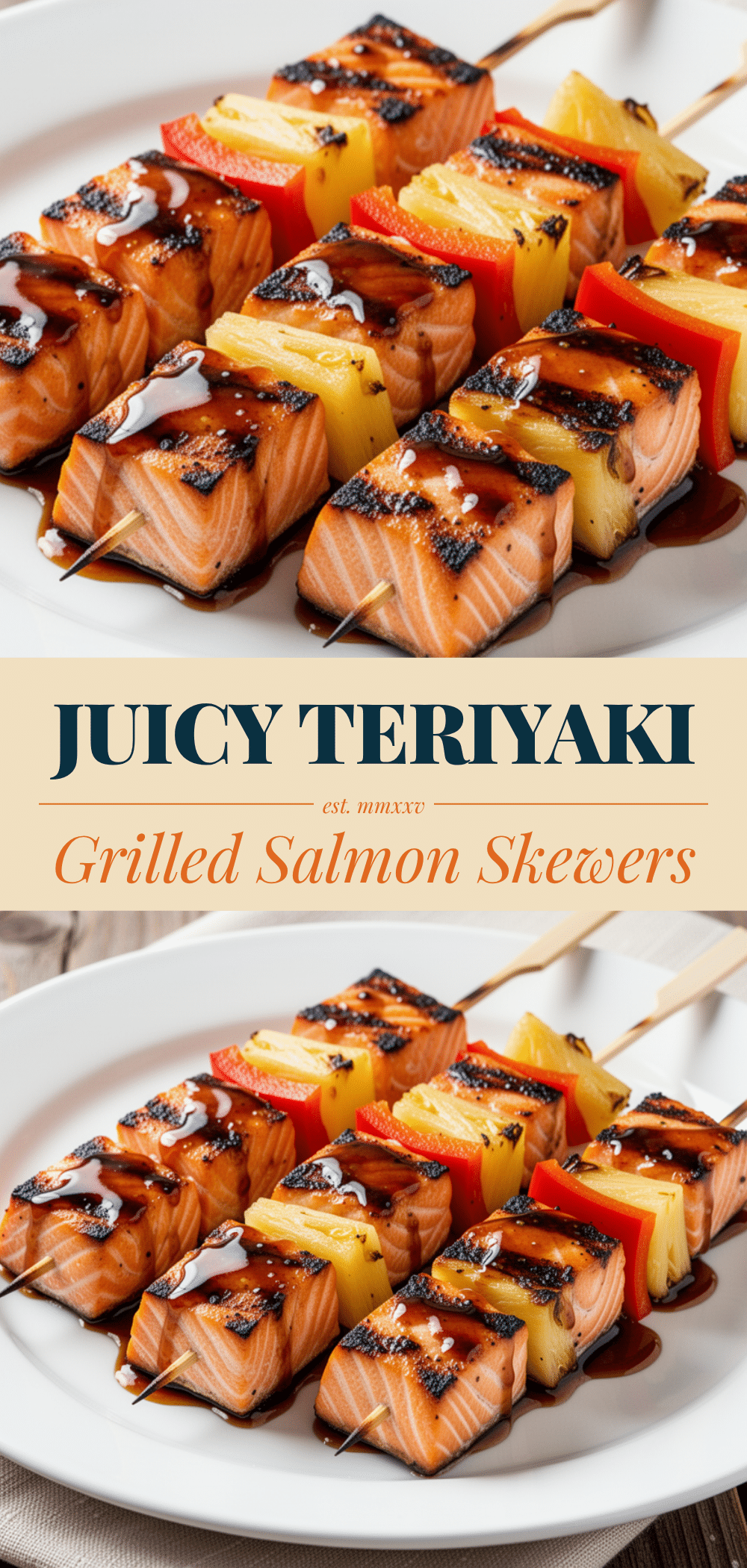
Grilled Salmon Skewers: Best Easy Labor Day Dinner
- Total Time: 45 minutes
- Yield: 4 servings 1x
Description
A quick and stress-free Labor Day dinner featuring fresh salmon and vegetables threaded onto skewers, marinated in a bright lemon-dill mixture, and grilled to perfection.
Ingredients
- 2 pounds center-cut salmon fillets, cut into 1.5-inch cubes
- 2 medium bell peppers (red and yellow), chopped into 1-inch chunks
- 1 large red onion, cut into 1-inch wedges
- 1 medium zucchini, sliced into ½-inch rounds
- 1 cup cherry tomatoes, whole or halved
- ¼ cup fresh dill, chopped
- ¼ cup extra virgin olive oil
- 3 tablespoons fresh lemon juice
- 4 cloves garlic, minced
- 1 tablespoon Dijon mustard
- 1 tablespoon honey
- 1 teaspoon smoked paprika
- 1 teaspoon kosher salt
- 1 teaspoon black pepper
- Wooden or bamboo skewers (soaked) or metal skewers
Instructions
- Soak wooden or bamboo skewers in water for at least 30 minutes to prevent burning.
- In a large bowl, whisk together olive oil, lemon juice, minced garlic, Dijon mustard, honey, smoked paprika, salt, and pepper until emulsified.
- Rinse salmon fillets and pat dry. Cut into 1.5-inch cubes and remove any pin bones.
- Add salmon cubes to the marinade bowl and gently toss to coat. Let sit at room temperature for 15-30 minutes (do not exceed 30 minutes).
- While salmon marinates, chop bell peppers, zucchini, and red onion. Soak onion wedges in cold water for 10 minutes, then drain and pat dry.
- Thread ingredients onto skewers in an alternating pattern, placing denser veggies first, then salmon, then softer veggies. Leave space between pieces.
- Preheat grill to medium-high heat (400°F / 200°C). Clean and oil the grates thoroughly.
- Place skewers on the grill and cook for 3-4 minutes on the first side without moving to create a char.
- Flip carefully and cook for another 3-4 minutes on the second side, or until salmon flakes easily with a fork and is opaque throughout. Brush with extra marinade halfway through if desired.
- Transfer to a platter, garnish with fresh dill and lemon wedges, and serve immediately.
Notes
Do not over-marinate the salmon as the acid will break down the protein and make it mushy. Ensure grates are clean and well-oiled to prevent sticking. Let salmon rest slightly off the grill as it continues to cook. Red onions should be soaked to prevent burning.
- Prep Time: 15 minutes
- Cook Time: 12-15 minutes
- Category: Main Course
- Cuisine: American
Nutrition
- Serving Size: 1 skewer set per per
- Calories: 350
- Sugar: 8
- Sodium: 450
- Fat: 18
- Saturated Fat: 3
- Carbohydrates: 15
- Fiber: 3
- Protein: 30
Keywords: grilled salmon skewers, labor day dinner, easy grilling, healthy seafood, summer recipes, quick dinner, salmon kebabs


