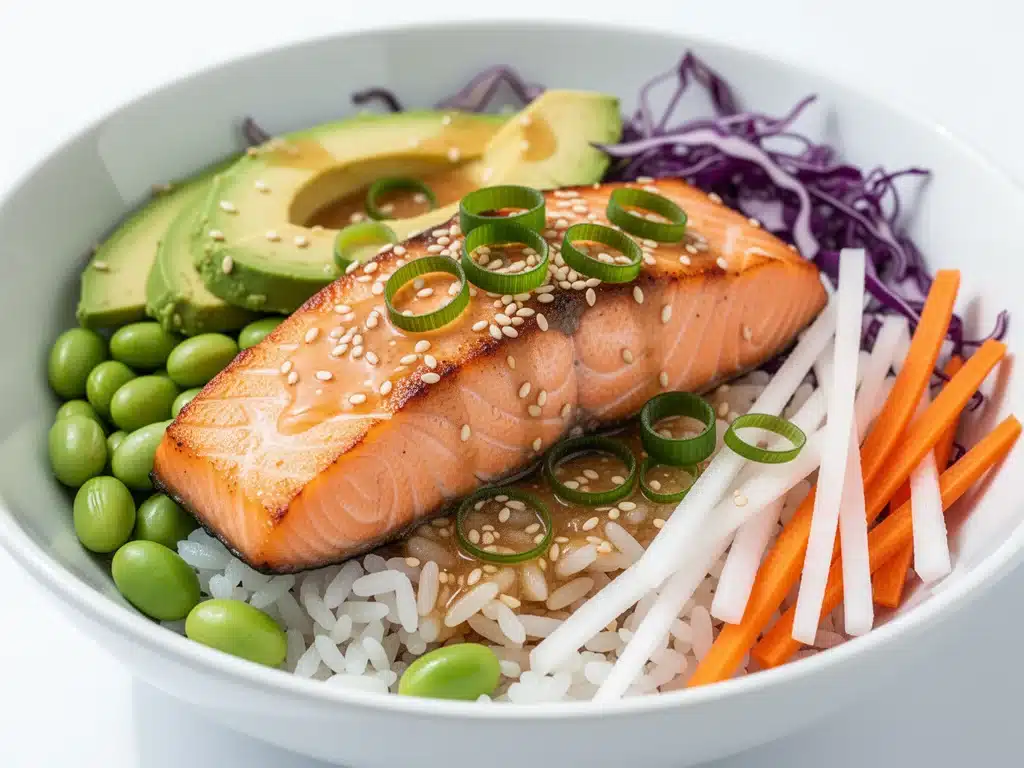
Last Tuesday, I came home from work with a headache, a dead phone, and zero motivation. The “I’ll just order sushi” voice in my head was getting louder. But I was also staring at a beautiful, wild-caught salmon fillet in my freezer that I’d forgotten about until that very moment. I didn’t want to thaw it properly for a fancy dinner party. I just wanted something fast, healthy, and actually good for me.
So I threw together what I now call my Asian Salmon Bowls. I didn’t have a complex marinade. I didn’t have time to make homemade teriyaki from scratch. I grabbed five things from my pantry and fridge, threw it in a hot skillet, and assembled it over rice. Thirty minutes later, I was eating something that tasted better than the $25 delivery I was about to order.
Here’s the thing about Asian Salmon Bowls: they don’t feel like “diet food.” They feel like a treat. The salmon gets this incredible crispy skin (if you’re brave enough to leave it on) or just flaky, golden perfection. The sauce is sweet, salty, and garlicky without being overly heavy. And the crunch from the veggies? That’s the secret weapon.
I’ve made this recipe at least eight times in the last month. Sometimes I use brown rice, sometimes I switch to quinoa. Sometimes I’m lazy and use pre-shredded carrots. But the core remains the same: it’s healthy, it’s fast, and it uses only five main ingredients. If you’re tired of the same old chicken and rice routine, trust me on this one. It’s a game-changer.
Why You’ll Love This Recipe
There are a lot of healthy dinner recipes out there, but most of them require a trip to the Asian grocery store or a forty-minute cook time. This one is different. It fits into the real life of a busy human. Here’s why these Asian Salmon Bowls have permanently replaced my usual rotation:
- Actually Takes 30 Minutes — Not “prep-heavy” 30 minutes. Real, throw-it-together 30 minutes. The salmon cooks in 12 minutes. The rice cooks while you prepped the veggies. The sauce takes 2 minutes. It’s efficient.
- Only 5 Main Ingredients — I’m not joking. Salmon, rice, a few veggies, and a simple sauce. No weird spices you’ll use once and forget. No fancy oils. Just good, simple food.
- High Protein, Low Stress — Salmon is packed with omega-3s and protein, which keeps you full without that heavy, sluggish feeling you get after a carb-only meal. I feel energized after eating this, not ready for a nap.
- Meal Prep Friendly — I make a double batch on Sundays. The flavors actually get better the next day as the salmon absorbs a bit of the sauce. It’s my go-to lunch for work because it doesn’t smell like fish in the breakroom microwave.
- Kid-Approved (Mostly) — My picky eater son usually turns his nose up at “healthy” food, but he loves the sweet-savory sauce. If you serve it with white rice and mild veggies, even he asks for seconds.
It’s the kind of dinner that makes you feel like you’re eating well without thinking about it. No guilt, no complicated techniques, just delicious, nourishing food.
Ingredients You’ll Need
The beauty of this Asian Salmon Bowls recipe is its simplicity. You don’t need a pantry full of exotic items. Here’s what I’m using, and why it matters.
For the Salmon
Salmon Fillets (2 pounds / 900g) — This is your star. I prefer wild-caught sockeye or coho because they have a firmer texture and more flavor than farmed atlantic. But any fresh salmon works. If you’re using frozen, make sure it’s thawed completely and patted dry. Moisture is the enemy of crispy salmon.
Neutral Oil (2 tablespoons / 30ml) — I use avocado oil or canola oil. You need a high smoke point because we’re searing the salmon. Olive oil might burn at that temperature.
Salt and Black Pepper — Just good quality kosher salt and freshly cracked pepper. Keep it simple.
For the Sauce
Soy Sauce (¼ cup / 60ml) — I use low-sodium soy sauce because I can control the saltiness. Regular soy sauce works, but you might want to add less salt to the salmon. Tamari is a great gluten-free option.
Honey (2 tablespoons / 30g) — This balances the saltiness of the soy sauce. I use raw honey if I have it, but regular works fine. Maple syrup is a good substitute if you’re avoiding refined sugars.
Minced Garlic (3 cloves / 1 tablespoon) — Fresh garlic is non-negotiable here. Jarred garlic just doesn’t have that punch. If you’re feeling lazy, use a garlic press. It’s faster and tastes almost the same.
Fresh Ginger (1 teaspoon, grated) — This adds that bright, zesty kick that defines Asian flavors. Fresh ginger is best, but ground ginger works in a pinch (use ½ teaspoon). Don’t skip the ginger; it’s what makes it taste “Asian” and not just “soy-glazed.”
For the Bowls
Cooked Rice (2 cups / 400g) — Jasmine rice is traditional and smells amazing. Brown rice adds more fiber and nuttiness. Quinoa is a great grain-free alternative. I usually cook a big batch of rice on Sunday so it’s ready to go.
Mixed Veggies (2 cups / 150g) — I like a mix of crunch and color. Shredded carrots, sliced cucumbers, and edamame are my favorites. You can also use steamed broccoli or snap peas. The key is texture contrast against the soft salmon and rice.
Green Onions (2 stalks, sliced) — For garnish. They add a fresh, oniony bite that cuts through the richness of the salmon. Sesame seeds are optional but highly recommended for that final touch.
Equipment Needed
You don’t need fancy gadgets for this. Here’s what I actually use in my kitchen.
Large Skillet (10-12 inch) — I use a cast-iron skillet because it holds heat well and gets the salmon crispy. Stainless steel works too. Non-stick is fine if you’re worried about sticking, but you won’t get the same crust.
Rice Cooker or Medium Pot — For the rice. A rice cooker is easier, but a pot with a tight lid works perfectly.
Small Bowl — For whisking the sauce. Any bowl will do.
Spatula — A thin, flexible spatula is best for flipping the salmon without breaking it. I learned this the hard way with a thick, stiff spatula.
Knife and Cutting Board — For prepping the veggies and garlic.
How to Make It: Step-by-Step
Alright, let’s get cooking. This process is straightforward, but there are a few tricks to get the salmon perfect.
Step 1: Prep Your Rice
Start your rice. If you’re using a rice cooker, just add the rice and water and hit start. If you’re using a pot, rinse the rice until the water runs clear (this removes excess starch and prevents mushiness). Bring water to a boil, add rice, reduce heat to low, cover, and simmer for 15-18 minutes. While the rice cooks, you can prep everything else.
Step 2: Make the Sauce
While the rice is doing its thing, grab a small bowl. Whisk together the soy sauce, honey, minced garlic, and grated ginger. Stir until the honey is fully dissolved. Taste it—it should be sweet, salty, and slightly spicy. If it’s too salty, add a splash of water. If it’s too sweet, add a bit more soy sauce. Set it aside.
Step 3: Prep the Salmon
Pat the salmon fillets dry with paper towels. This is crucial. Wet salmon steams instead of sears. Season both sides generously with salt and pepper. Heat your skillet over medium-high heat and add the neutral oil. Wait until the oil shimmers but doesn’t smoke.
Step 4: Sear the Salmon
Place the salmon in the skillet, skin-side down (if your salmon has skin). Press it down gently with your spatula for a few seconds to prevent curling. Cook for 4-5 minutes without moving it. You want a nice golden crust. Flip the salmon carefully. It should release easily from the pan if the crust is ready.
Step 5: Glaze the Salmon
Pour the sauce over the salmon. Reduce heat to medium-low. Let it simmer for 3-4 minutes, basting the salmon with the sauce using a spoon. The sauce will thicken and cling to the fish. The salmon is done when it flakes easily with a fork and reaches an internal temperature of 145°F (63°C). Remove from heat.
Step 6: Assemble the Bowls
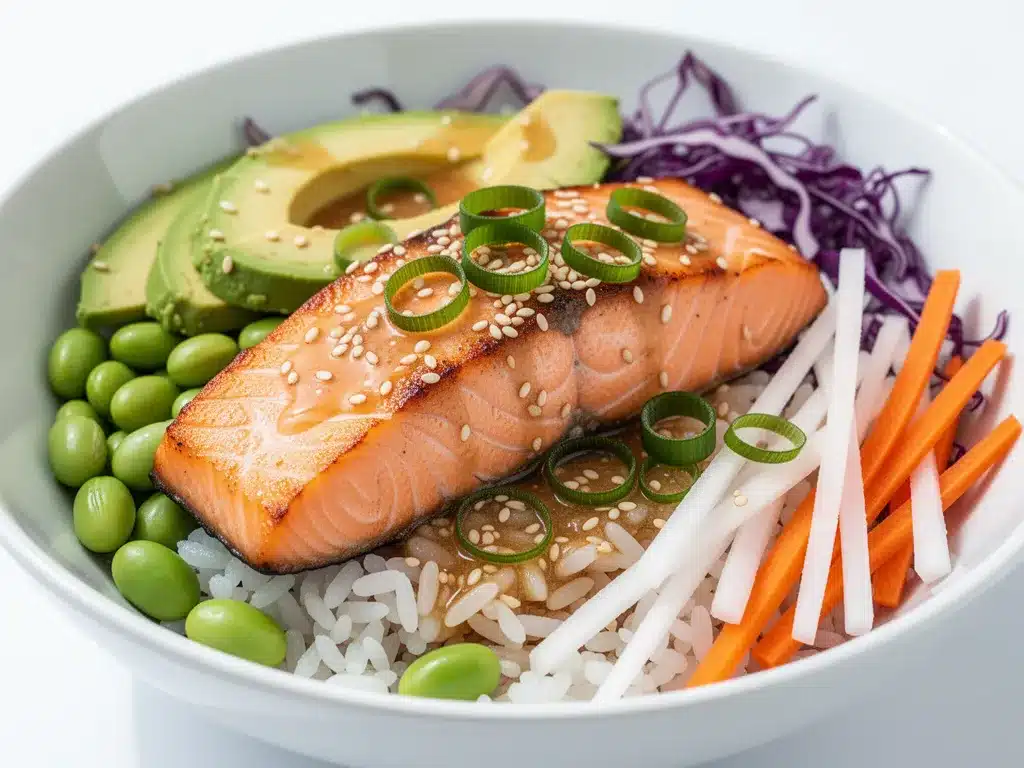
Fluff the rice and divide it among four bowls. Flake the salmon into large chunks and place it on top of the rice. Arrange your veggies around the salmon. Drizzle any remaining sauce from the pan over everything. Top with sliced green onions and sesame seeds.
Total Time: About 30 minutes (10 minutes prep, 20 minutes cooking).
Expert Tips & Tricks
I’ve made this enough times to know what works and what doesn’t. Here’s how to guarantee success.
Don’t Overcook the Salmon — Salmon continues to cook after it’s removed from the pan. Take it off when it’s almost done in the center. It will be juicy and moist. Overcooked salmon is dry and boring.
Let the Sauce Reduce — When you pour the sauce into the pan, let it bubble for a minute before basting. This concentrates the flavor and makes it stick to the fish better.
Use Fresh Ginger — I know it’s a pain to peel and grate, but the flavor difference is huge. Pre-minced ginger in jars has a fermented taste that doesn’t work here.
Prep Your Veggies First — Have your veggies ready to go before you start cooking the salmon. The salmon cooks fast, and you don’t want to be chopping cucumbers while your fish is burning.
Try Different Proteins — If you don’t like salmon, this sauce works great with chicken thighs or firm tofu. Just adjust the cooking time accordingly.
Variations & Substitutions
Once you’ve mastered the basic version, here’s how you can mix it up.
Gluten-Free — Swap soy sauce for tamari or coconut aminos. Everything else is naturally gluten-free.
Dairy-Free — This recipe is already dairy-free, so you’re good to go!
Low-Carb — Skip the rice and use cauliflower rice. Or serve it over zucchini noodles. The sauce is the main source of carbs, so reduce the honey if you’re strict.
Spicy Kick — Add a teaspoon of sriracha or chili flakes to the sauce. It adds a nice heat that balances the sweetness.
Veggie-Loaded — Add steamed broccoli, snap peas, or bell peppers. The more color, the better.
Teriyaki Style — Add a tablespoon of cornstarch to the sauce to make it thicker and glossier, like restaurant teriyaki.
Serving & Storage
How to Serve: I serve these bowls warm, straight from the stove. They look rustic and inviting. Add a side of miso soup or edamame for a complete meal.
Storage: Store leftovers in an airtight container in the fridge for up to 3 days. The salmon will stay moist if covered well. The sauce might thicken in the fridge—just add a splash of water or soy sauce when reheating.
Reheating: Reheat in the microwave for 1-2 minutes, or in a skillet over low heat. Avoid high heat, or the salmon will dry out.
Freezing: I don’t recommend freezing salmon bowls. The texture of the salmon changes when frozen and thawed. It’s best enjoyed fresh.
Nutrition Information
I’m not a nutritionist, but here’s the breakdown per serving (based on 4 servings).
| Nutrient | Amount |
|---|---|
| Calories | 450 |
| Protein | 35g |
| Carbs | 40g |
| Fat | 18g |
| Fiber | 3g |
This meal is high in protein and healthy fats from the salmon. The carbs come from the rice, which gives you energy. It’s a balanced, satisfying meal that keeps you full.
Final Thoughts
So that’s my Asian Salmon Bowls! I know I’ve raved about this recipe a lot, but it’s genuinely one of my favorites. It’s healthy, it’s fast, and it tastes amazing. I hope you give it a try and let me know how it turns out.
If you make this, drop a comment and let me know what you think! I love hearing how recipes turn out in your kitchen. And if something doesn’t work, tell me that too—I’m here to help troubleshoot.
Happy cooking! And I hope your kitchen smells half as good as mine does right now.
Frequently Asked Questions
Can I use frozen salmon?
Yes, but you need to thaw it completely first. Pat it very dry with paper towels to remove excess moisture. This helps it sear properly instead of steaming.
What kind of rice is best?
Jasmine rice is traditional and has a nice fragrance. Brown rice is healthier but takes longer to cook. Quinoa is a great grain-free option.
Can I make the sauce ahead of time?
Yes! You can make the sauce up to 3 days in advance and store it in the fridge. Just whisk it well before using.
Why is my salmon sticking to the pan?
Usually, this means the pan wasn’t hot enough when you added the fish, or you tried to flip it too soon. Let the salmon sear for 4-5 minutes undisturbed. It should release easily when the crust is formed.
Can I use tofu instead of salmon?
Absolutely! Press firm tofu first to remove moisture, then pan-fry it until crispy. Pour the sauce over it and let it simmer for a few minutes.
How do I reheat leftovers without drying out the salmon?
Add a splash of water or broth to the bowl before microwaving. Cover it and heat in short intervals, stirring gently. This keeps the salmon moist.
Pin This Recipe!
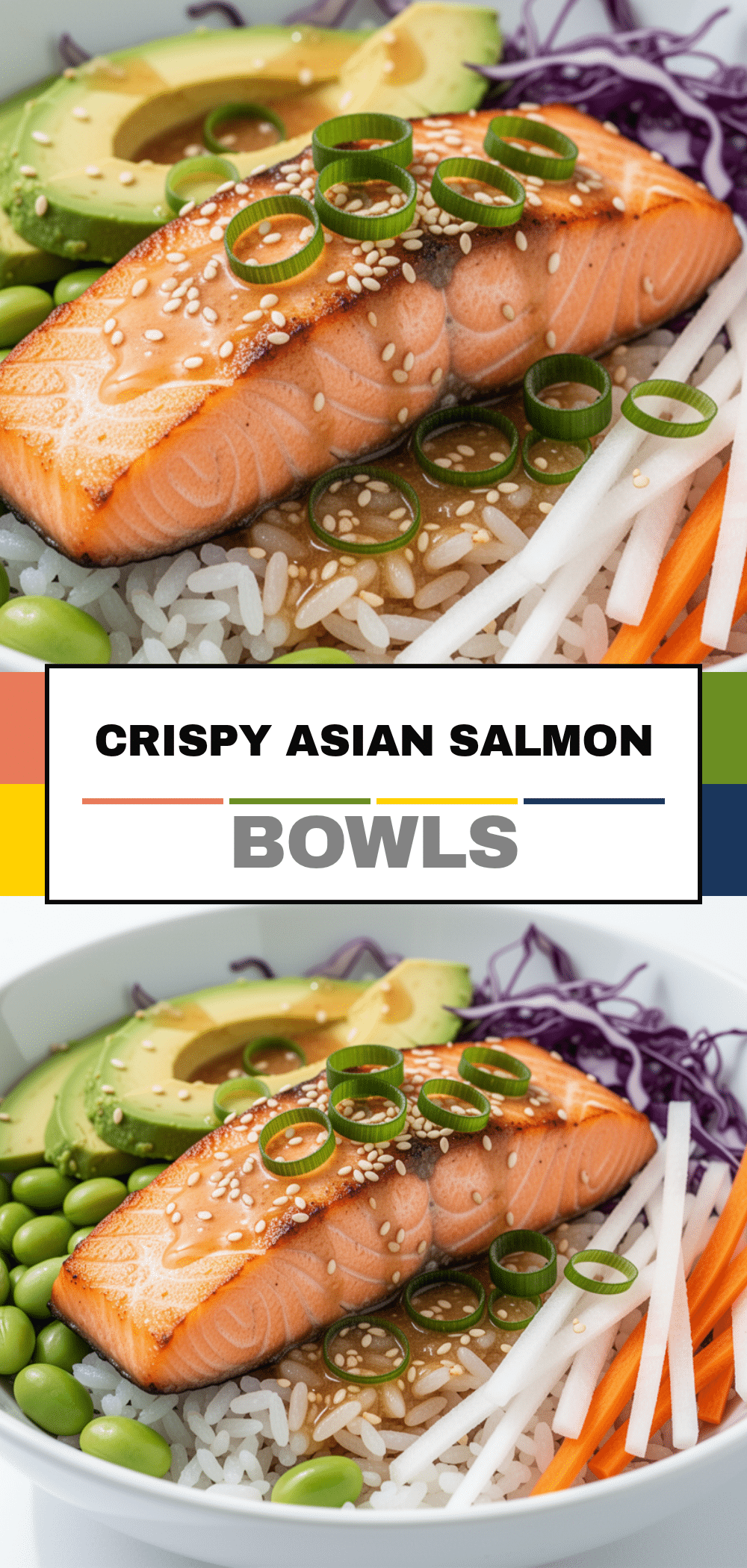
Asian Salmon Bowls: 5-Ingredient Healthy 30-Minute Dinner
- Total Time: 30 minutes
- Yield: 4 servings 1x
Description
A fast, healthy, and delicious dinner featuring crispy seared salmon with a sweet and savory Asian-inspired sauce, served over rice with crunchy vegetables. Ready in just 30 minutes with only five main ingredients.
Ingredients
- 2 pounds (900g) Salmon Fillets (wild-caught preferred)
- 2 tablespoons (30ml) Neutral Oil (avocado or canola)
- Salt and Black Pepper to taste
- ¼ cup (60ml) Soy Sauce (low-sodium or Tamari for gluten-free)
- 2 tablespoons (30g) Honey
- 3 cloves Minced Garlic (or 1 tablespoon)
- 1 teaspoon Fresh Ginger, grated
- 2 cups (400g) Cooked Rice (Jasmine, Brown, or Quinoa)
- 2 cups (150g) Mixed Veggies (shredded carrots, cucumbers, edamame, etc.)
- 2 stalks Green Onions, sliced
- Sesame seeds for garnish (optional)
Instructions
- Start cooking the rice according to package directions. If using a pot, rinse rice until water runs clear, bring to a boil, reduce heat to low, cover, and simmer for 15-18 minutes.
- In a small bowl, whisk together soy sauce, honey, minced garlic, and grated ginger until the honey is dissolved. Set aside.
- Pat salmon fillets dry with paper towels. Season both sides generously with salt and pepper.
- Heat neutral oil in a large skillet (10-12 inch) over medium-high heat until it shimmers.
- Place salmon in the skillet skin-side down. Press gently with a spatula to prevent curling. Cook for 4-5 minutes without moving to create a golden crust.
- Flip the salmon carefully. Pour the sauce over the salmon.
- Reduce heat to medium-low. Simmer for 3-4 minutes, basting the salmon with the sauce using a spoon, until the sauce thickens and salmon flakes easily (internal temp 145°F/63°C).
- Fluff the rice and divide among four bowls.
- Flake the salmon into large chunks and place on top of the rice.
- Arrange mixed veggies around the salmon. Drizzle remaining sauce from the pan over everything.
- Top with sliced green onions and sesame seeds. Serve warm.
Notes
Pat salmon dry before cooking to ensure a crispy sear rather than steaming. Do not overcook the salmon as it continues to cook after removal from heat. For a spicy kick, add sriracha or chili flakes to the sauce. Leftovers can be stored in the fridge for up to 3 days; reheat gently to avoid drying out the fish.
- Prep Time: 10 minutes
- Cook Time: 20 minutes
- Category: Main Course
- Cuisine: Asian
Nutrition
- Serving Size: 1 bowl per serving
- Calories: 450
- Fat: 18
- Carbohydrates: 40
- Fiber: 3
- Protein: 35
Keywords: salmon bowls, healthy dinner, 30 minute meals, asian salmon, high protein, meal prep, gluten-free option, dairy-free, quick recipes


