Last Friday night, I was standing in my kitchen, staring at a piece of salmon that looked suspiciously like it had been in the freezer since the Obama administration. I was tired. I was hungry. And I really, really didn’t want to make anything that required more than three steps or a trip to the grocery store. I was on the verge of ordering takeout—again—when I remembered the block of cream cheese in my fridge and the bag of frozen spinach in the back of the freezer.
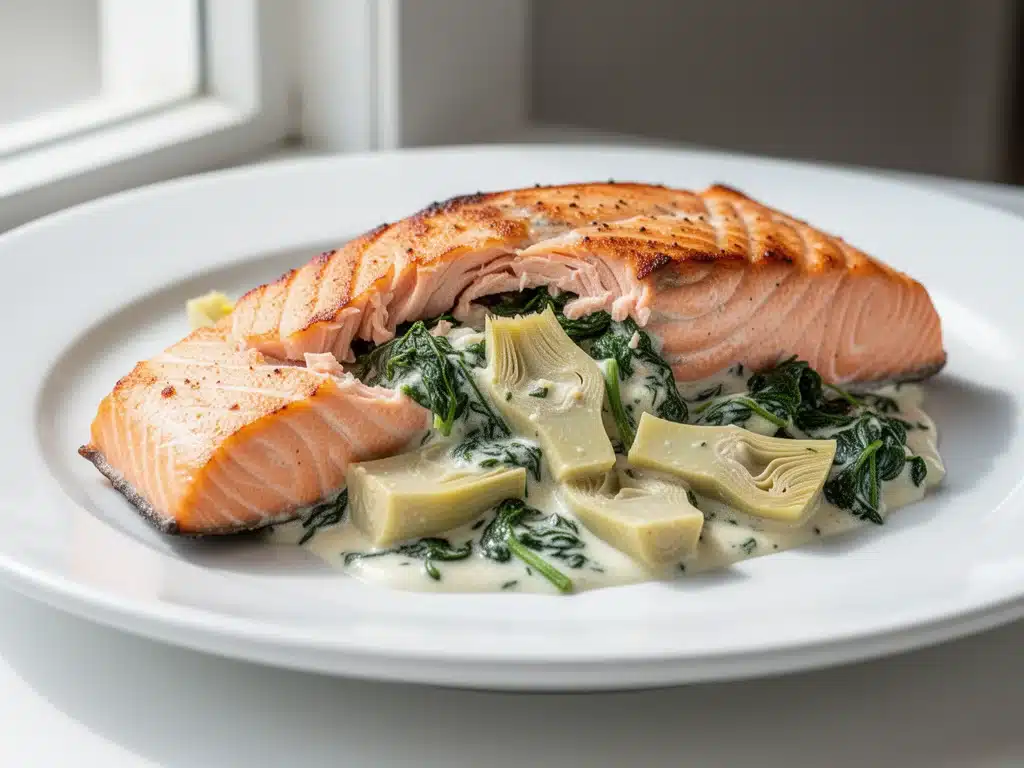
I threw together what I thought would be a mediocre, quick-fix dinner. I sliced the salmon open, stuffed it with a creamy spinach and artichoke mixture, and shoved it in the oven. Ten minutes later, the smell of garlic, cream cheese, and baking fish filled the house. My husband walked in, sniffed the air, and asked, “Did you order from that fancy seafood place downtown?”
I had to tell him no. It was just me, some leftover ingredients, and a lot of garlic. But here’s the thing: that accidental dinner was so good that I made it three times in the following week. Not because I had to, but because my family kept asking for it. That is how I discovered that Stuffed Salmon with Spinach Artichoke isn’t just a quick weeknight fix; it’s actually restaurant-quality food that beats most takeout options.
I’ve tested this recipe about a dozen times now. I’ve tried different types of salmon (Atlantic, wild-caught, center-cut, thick fillets). I’ve messed up the stuffing ratios (too much cream cheese made it slide out; too little made it dry). I’ve burned the top. I’ve undercooked the fish. But after all those tries, I finally nailed the perfect balance. The salmon stays juicy, the stuffing gets golden and bubbly, and the whole thing comes together in under 30 minutes. If you’ve been looking for a seafood dinner that looks impressive but is stupidly easy, this is it.
Why You’ll Love This Recipe
There are about a million reasons I keep making this stuffed salmon, but if I had to narrow it down to the ones that actually matter for your weeknight sanity, here they are.
It Tastes Like a Date Night — Seriously. The combination of creamy spinach, tangy artichoke hearts, and rich salmon feels luxurious. But the best part? It takes less time to prep this than it does to drive to a restaurant. You get that fancy restaurant vibe without the $60 bill or the wait.
Zero Fishy Taste — I know what you’re thinking. “I don’t like fishy-tasting salmon.” Me neither. That’s why this recipe works so well. The cream cheese, garlic, and lemon juice mask any potential fishy flavors completely. It tastes rich, savory, and clean. Even my kids, who usually pick the skin off their fish, devour this.
One Pan, Less Cleanup — This is huge for me. You stuff the salmon, put it on a baking sheet, and bake. That’s it. No sautéing multiple components, no complicated stovetop sauces to scrub later. If you can bake, you can make this.
Uses Frozen Ingredients — I don’t always have fresh artichoke hearts in the house (they’re expensive and spoil fast). Frozen spinach and canned or frozen artichoke hearts work perfectly here. It’s pantry-friendly and budget-smart.
High Protein, Low Carb — If you’re watching your carbs or just trying to eat cleaner, this is a winner. Salmon is packed with omega-3s and protein, and the stuffing adds healthy fats without the heavy carbs. It’s filling but doesn’t leave you feeling sluggish.
This has completely changed our Wednesday night routine. It’s my go-to when I need dinner to just work, look good, and taste amazing. No complicated techniques, no weird ingredients, just reliable, delicious food that makes everyone happy.
Ingredients You’ll Need
Here’s the best part: you probably have most of this already. This isn’t a recipe that requires a special trip to three different specialty stores. I’m particular about a few things here, but mostly, it’s about quality over quantity.
SALMON FILLETS (4 fillets, about 6oz each / 680g) — Look for center-cut fillets if you can. They’re thicker and hold up better to stuffing than the thin tail pieces. Wild-caught Alaskan is my favorite for flavor, but farmed Atlantic is fine if you want something milder and fattier. Make sure they’re fresh—smell them. If they smell like strong fish, put them back.
CREAM CHEESE (4 ounces / 115g) — Softened is non-negotiable. If it’s cold and hard, you’ll get lumps in your stuffing. I take it out of the fridge 15 minutes before I start. Full-fat only; low-fat versions don’t get creamy and can make the stuffing grainy.
PARMESAN CHEESE (½ cup / 50g, freshly grated) — Buy the block and grate it yourself. Pre-grated Parmesan has cellulose in it that prevents it from melting smoothly. Freshly grated Parmesan gives you that salty, nutty punch that ties the stuffing together. Don’t skimp.
FROZEN SPINACH (10 ounces / 280g, thawed and drained) — Yes, frozen. It’s cheaper, easier to find, and works perfectly here. The key is getting ALL the water out. Squeeze it in a clean kitchen towel or paper towels until it’s almost dry. Wet spinach = watery stuffing = sad salmon.
ARTICHOKE HEARTS (1 can, 14oz / 396g, drained and chopped) — You can use canned or frozen. If you use canned, rinse them well to remove that metallic brine taste. Chop them into small pieces. You want little bits in every bite, not huge chunks.
GARLIC (4 cloves, minced / about 2 tablespoons) — Fresh only. Jarred garlic has a sharp, metallic flavor that doesn’t work in this delicate cream sauce. Minced is fine, or use a garlic press if you want it finer. Four cloves is the sweet spot—not too overpowering, but definitely noticeable.
LEMON JUICE (1 tablespoon / 15ml) — Freshly squeezed is best. Bottled lemon juice has preservatives that taste weird when baked. Just cut a lemon and squeeze it. The acid cuts through the richness of the cream cheese.
FRESH DILL (2 tablespoons, chopped / 10g) — Or 2 teaspoons dried dill. Fresh dill gives a bright, grassy flavor that pairs perfectly with salmon. If you hate dill, parsley works too, but dill is the classic pairing for a reason.
RED PEPPER FLAKES (½ teaspoon) — Optional, but I recommend it. A little heat balances the creaminess. If you’re sensitive to spice, start with a pinch.
OUNCING (2 tablespoons / 30g) — For the pan. Olive oil works too, but butter adds a nice richness to the baking sheet.
SALT AND BLACK PEPPER — To taste. I usually use about 1 teaspoon kosher salt for the fillets.
LEMON WEDGES — For serving. Essential for squeezing over the top right before eating.
Equipment Needed
You don’t need fancy equipment for this. Here’s what I actually use.
Baking Sheet — I use a standard half-sheet pan. Line it with parchment paper or foil for easy cleanup. The stuffing can drip, and you don’t want to scrub burnt cheese off your pan later.
Small Mixing Bowl — For combining the stuffing. Any small bowl works. I use a 1-cup measuring cup sometimes because it’s easier to clean.
Fork — For flaking the salmon slightly to create the pocket. You don’t need a knife for this if you’re careful.
Spatula — A small offset spatula is nice for spreading the stuffing, but a regular butter knife or spoon works fine.
Kitchen Towel or Paper Towels — For squeezing the spinach. This is crucial. Don’t skip this step.
Sharp Knife — Just in case you need to trim any bits of the salmon or chop the artichokes if they’re in big pieces.
Measuring Spoons — Standard stuff. Dollar store versions work fine.
Oven — Obviously. Preheat to 400°F (200°C). Make sure it’s fully preheated before you put the salmon in.
How to Make It: Step-by-Step
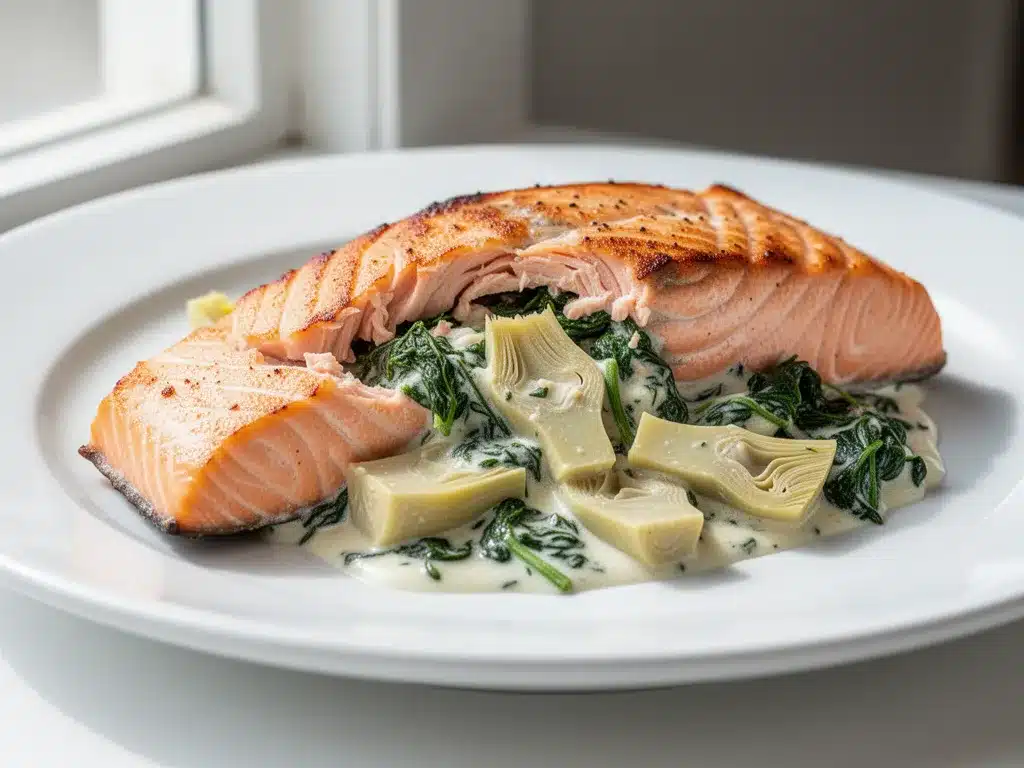
Alright, let’s make this! I’m walking you through exactly how I do it, including the little tricks I’ve picked up so your stuffing doesn’t slide off and your fish doesn’t dry out.
Step 1: Prep the Spinach (5 minutes)
This is the most important step. Take your frozen spinach and thaw it. You can leave it on the counter for an hour or microwave it for 2 minutes. Once it’s soft, place it in a clean kitchen towel or several layers of paper towels. Squeeze it. Hard. You want to get every drop of water out. If the spinach is wet, your stuffing will be runny and slide out of the salmon while it bakes. I usually squeeze it until the towel is damp but the spinach feels dry to the touch. Set it aside.
Step 2: Make the Stuffing (5 minutes)
In your small mixing bowl, combine the softened cream cheese, grated Parmesan, minced garlic, chopped artichoke hearts, chopped dill, lemon juice, and red pepper flakes. Mix it all together with a fork or spoon until it’s a thick, creamy paste. Taste it. Does it need more salt? Add a pinch. Does it need more garlic? Add a clove. This is your flavor base, so make it taste good on its own. If it’s too stiff to spread, add a teaspoon of milk or cream. If it’s too loose, add a bit more Parmesan.
Step 3: Create the Pocket in the Salmon (5 minutes)
Pat your salmon fillets dry with paper towels. Moisture is the enemy of good searing and browning. Now, take a sharp knife or just use your fingers to gently lift the top layer of the salmon. You want to create a pocket. Don’t cut all the way through! You’re making a slit in the middle of the fillet, not a sandwich. If the fillet is thick, you can make two slits. If it’s thin, one slit is enough. Be gentle. You don’t want to tear the fish.
Step 4: Stuff the Salmon (3 minutes)
Take a generous spoonful of the spinach-artichoke mixture and push it into the pocket you created. Use your finger or a small spoon to tuck it in. Don’t overstuff it. If you pack it too tight, the stuffing will burst out when the fish expands in the heat. Aim for about 2-3 tablespoons per fillet. The goal is to have stuffing in every bite, not a huge ball of cheese in the middle.
Step 5: Season and Bake (15-18 minutes)
Preheat your oven to 400°F (200°C). Line a baking sheet with parchment paper or foil and brush with a little olive oil or butter. Place the stuffed salmon on the sheet, seam-side up so the stuffing stays visible. Sprinkle the tops with salt and black pepper. Bake for 15-18 minutes. The exact time depends on the thickness of your fillets. A good rule of thumb: cook for 4-5 minutes per inch of thickness. You want the salmon to be opaque and flake easily with a fork, but still juicy. Do not overcook it, or it will be dry.
Step 6: Broil for Color (2 minutes)
Optional but recommended. Once the salmon is cooked through, turn the broiler on high for the last 2 minutes of cooking. Watch it closely! The top of the stuffing should get golden brown and bubbly. If it starts to burn, take it out. This step adds a nice texture contrast to the creamy stuffing.
Step 7: Serve
Remove from the oven and let it rest for 2 minutes. This helps the stuffing set slightly so it doesn’t spill out when you cut it. Serve immediately with lemon wedges on the side. Squeeze fresh lemon over the top right before eating. It brightens everything up.
Total Time: About 30 minutes (10 minutes prep, 20 minutes cook time)
Expert Tips & Tricks
Here’s everything I’ve learned from making this dozens of times. These tips will save you from my mistakes.
Squeeze the Spinach Dry
I can’t stress this enough. Wet spinach is the #1 reason this recipe fails. The water releases into the stuffing, making it runny and causing it to slide out of the fish. Squeeze it until it’s almost crispy. I use a tea towel because it absorbs more water than paper towels.
Don’t Overstuff
I know you want lots of that delicious filling, but too much stuffing will burst out of the pocket and burn on the baking sheet. Less is more. A thin layer of stuffing inside the fish is perfect. You can always put extra stuffing on top after baking if you want more.
Check for Bones
Before you start, run your fingers over the salmon fillet to check for pin bones. They’re tiny, sharp bones that can ruin the experience. Use tweezers to pull them out. It takes 30 seconds and saves you from a bad surprise.
Use a Meat Thermometer
If you’re worried about undercooking or overcooking, use a meat thermometer. Salmon is done at 145°F (63°C), but I like to pull it out at 135°F (57°C) because it will continue to cook slightly after you take it out of the oven. This keeps it moist.
Room Temperature Cream Cheese
If your cream cheese is cold, it won’t mix smoothly with the other ingredients. You’ll get lumps. Take it out of the fridge 15 minutes before you start. If you forget, microwave it for 10 seconds. It should be soft enough to mash with a fork.
Common Mistakes (and how to avoid them):
Mistake: Stuffing falls out
Fix: Don’t overstuff. Also, make sure your pocket is deep enough. If the fillet is thin, you might need to fold the top over the stuffing and secure it with a toothpick.
Mistake: Salmon is dry
Fix: You overcooked it. Check it early. Salmon continues to cook after it’s removed from the oven.
Mistake: Stuffing is bland
Fix: Taste the stuffing before you put it in the fish. Add more garlic, salt, or lemon juice if needed. The fish will mute the flavors slightly, so the stuffing should taste slightly stronger than you want it to.
Variations & Substitutions
Once you’ve nailed the basic version, here’s how you can mix it up. I’ve tried all of these.
Cream Cheese Substitute
If you can’t have dairy, you can use vegan cream cheese. It works surprisingly well, though the texture is slightly different. I’ve used Kite Hill brand and it holds up fine. Just make sure it’s softened.
Artichoke Substitute
No artichokes? No problem. You can use sun-dried tomatoes chopped up small. They add a nice chewy texture and tangy flavor. Or just skip the artichokes and make a garlic-herb cream cheese stuffing. Still delicious.
Herb Swap
Don’t like dill? Use fresh parsley, chives, or even tarragon. Tarragon is a classic pairing with fish and adds a nice anise flavor. Basil works too, but it’s less traditional.
Gluten-Free
This recipe is naturally gluten-free. Just make sure your cream cheese and artichoke hearts don’t have any added thickeners or stabilizers that contain gluten (most don’t, but check labels if you’re sensitive).
Lighter Version
Use light cream cheese and reduce the Parmesan to ¼ cup. It’s still creamy but less rich. I make this when I’m trying to be “healthy,” but honestly, the full-fat version is worth the calories.
Add Heat
Add a diced jalapeño to the stuffing for a spicy kick. Or use cayenne pepper instead of red pepper flakes. Great if you like bold flavors.
Protein Swap
You can stuff other fish with this mixture. Trout, cod, or halibut all work well. Just adjust the cooking time based on thickness. Thinner fillets will cook faster.
Serving & Storage
How to Serve:
I usually serve this straight from the baking sheet at the dinner table—it looks rustic and stays warm. But here are other ways I’ve enjoyed it:
Side Dishes:
- Asparagus: Roasted asparagus with lemon zest is the perfect companion.
- Rice or Quinoa: Plain steamed rice soaks up any extra sauce.
- Green Salad: A simple arugula salad with vinaigrette cuts the richness.
- Roasted Potatoes: If you want something heartier.
Toppings Bar:
When I have guests, I put out: extra lemon wedges, fresh dill, red pepper flakes, and a little extra Parmesan. Everyone customizes their bowl.
Wine Pairing:
Not a wine expert, but my wine-snob friend says a crisp Sauvignon Blanc or a light Chardonnay works great with this. Something with good acidity to cut through the cream.
Storage Instructions:
Refrigerator:
Store leftovers in an airtight container for up to 3 days. The salmon will get a bit firmer in the fridge, but it’s still good.
Reheating:
Best method: Reheat in the oven at 350°F (175°C) for 10-15 minutes. This keeps it moist. Microwave method: Heat in 30-second intervals, but it can get rubbery. I avoid the microwave if I can help it.
Freezing:
Honestly, this doesn’t freeze well. The cream cheese stuffing can separate and become grainy when thawed. I recommend eating it fresh or storing in the fridge for up to 3 days.
Meal Prep:
You can prep the stuffing and stuff the salmon ahead of time. Keep it covered in the fridge for up to 24 hours before baking. This is great for busy weeknights.
Nutrition Information
I’m not a nutritionist, but here’s the breakdown if you’re tracking.
Per Serving (based on 4 servings):
- Calories: 450
- Protein: 35g
- Carbs: 6g
- Fiber: 2g
- Sugar: 2g
- Fat: 30g
- Saturated Fat: 15g
- Cholesterol: 120mg
- Sodium: 500mg
What’s Good:
- High in protein and omega-3s
- Low carb
- Good source of calcium from cheese
What to Know:
- Higher in saturated fat due to cream cheese
- Contains dairy
- Use low-sodium artichokes to reduce sodium
My Take:
Look, this is rich, creamy comfort food. It’s not a diet recipe. But it’s way better than takeout, costs less, and I know exactly what’s in it. When I want to make it lighter, I use light cream cheese and skip the extra cheese on top. But usually? I just eat a reasonable portion and enjoy it.
Final Thoughts
So that’s my go-to Stuffed Salmon with Spinach Artichoke! I’ve probably talked your ear off at this point, but when you make a recipe this often, you have a lot to say about it.
This has saved weeknight dinners more times than I can count. It’s my answer to “what’s for dinner” when I’m tired, don’t want takeout, and still want something that tastes really good. My kids are happy, my husband’s happy, and I’m happy because I’m not stressed about cooking.
Make it yours! Try different herbs, swap in your favorite veggies, adjust the garlic (though more is always better in my opinion). The best recipes are the ones you adapt to your family’s tastes.
If you make this, drop a comment and let me know what you think! I love hearing how recipes turn out in your kitchen. And if something doesn’t work, tell me that too—I’m here to help troubleshoot.
Happy cooking! And I hope your kitchen smells half as good as mine does right now.
Frequently Asked Questions
Q: Can I use fresh spinach instead of frozen?
A: You can, but you’ll need to wilt it first in a pan or microwave, then squeeze out ALL the water. Fresh spinach has a lot more moisture than frozen, so you have to work harder to get it dry. If you skip the squeezing, your stuffing will be watery.
Q: How do I know when the salmon is done?
A: The easiest way is to check the color. It should turn from translucent pink to opaque pink. It should also flake easily with a fork. If you’re worried, use a meat thermometer. 145°F (63°C) is the safe temp, but I pull it out at 135°F (57°C).
Q: Can I make this in an air fryer?
A: Yes! Cook at 375°F (190°C) for 10-12 minutes. Check it early because air fryers cook faster. The stuffing might not get as brown, but the fish will be perfect.
Q: Why did my stuffing slide out?
A: Usually means you overstuffed it or the spinach was too wet. Make sure you squeeze the spinach dry and don’t pack the pocket too tight. If the fillet is thin, you can secure the top with a toothpick.
Q: Can I prep this ahead of time?
A: Yes. Stuff the salmon and keep it covered in the fridge for up to 24 hours before baking. This is great for meal prep. Just take it out of the fridge 15 minutes before baking to take the chill off.
Q: What if I don’t like artichokes?
A: Swap them for sun-dried tomatoes or just leave them out. You can also add chopped mushrooms or bell peppers. The base cream cheese mixture is good on its own.
Q: How long does this take to cook?
A: About 15-18 minutes at 400°F (200°C). Thinner fillets take less time, thicker ones take more. Always check early to avoid overcooking.
Pin This Recipe!
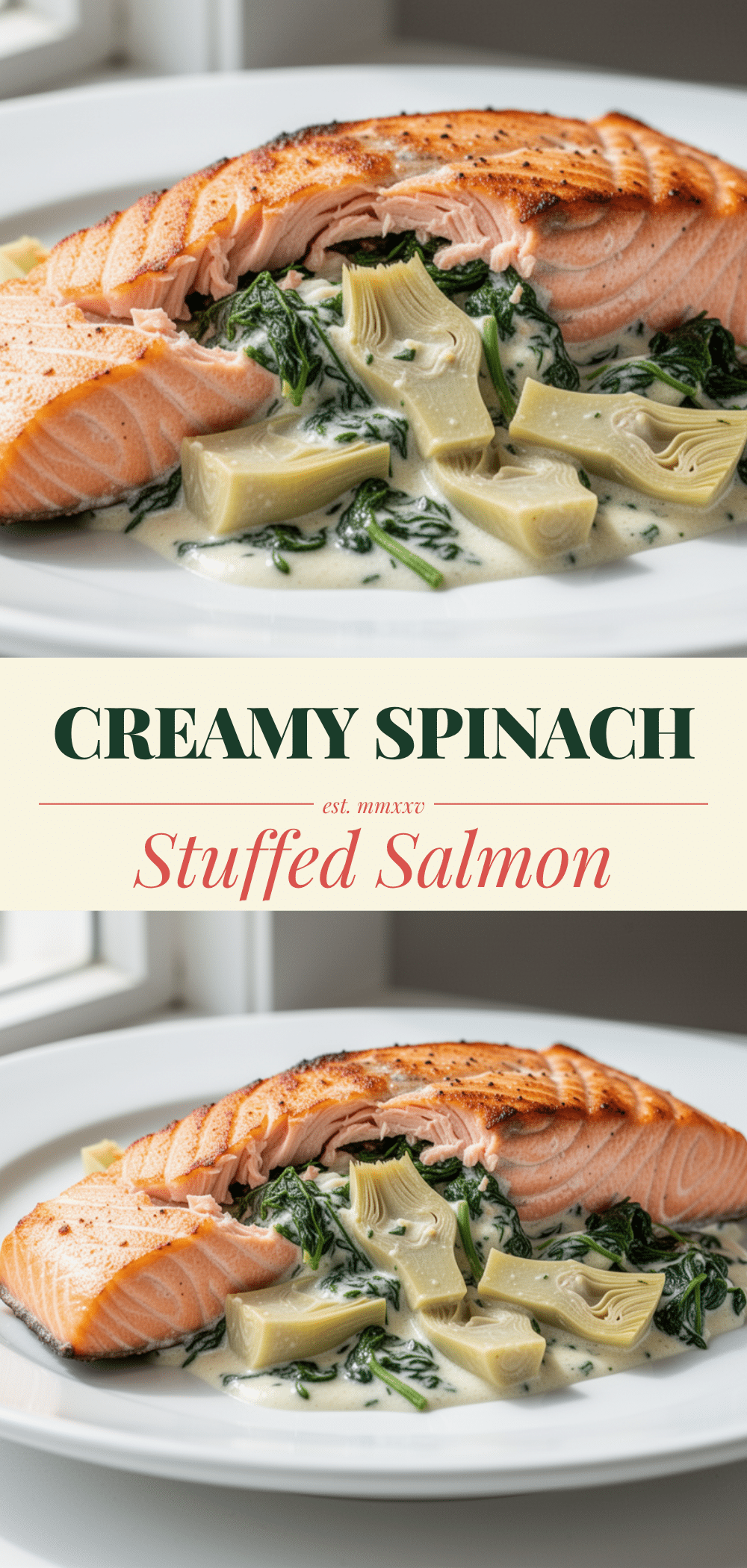
Stuffed Salmon with Spinach Artichoke
- Total Time: 30 minutes
- Yield: 4 servings 1x
Description
A creamy, restaurant-quality seafood dinner that is easy to make at home. Salmon fillets are stuffed with a rich mixture of cream cheese, spinach, artichokes, and garlic, then baked until golden and flaky.
Ingredients
- 4 salmon fillets (about 6oz each / 680g), center-cut
- 4 ounces (115g) cream cheese, softened
- ½ cup (50g) Parmesan cheese, freshly grated
- 10 ounces (280g) frozen spinach, thawed and thoroughly drained
- 1 can (14oz / 396g) artichoke hearts, drained and chopped
- 4 cloves garlic, minced
- 1 tablespoon (15ml) lemon juice, freshly squeezed
- 2 tablespoons (10g) fresh dill, chopped
- ½ teaspoon red pepper flakes
- 2 tablespoons (30g) butter or olive oil
- Salt and black pepper, to taste
- Lemon wedges, for serving
Instructions
- Preheat oven to 400°F (200°C). Line a baking sheet with parchment paper or foil and brush with butter or olive oil.
- Thaw the frozen spinach and squeeze it dry using a clean kitchen towel or paper towels until it is almost dry. Set aside.
- In a small mixing bowl, combine the softened cream cheese, grated Parmesan, minced garlic, chopped artichoke hearts, chopped dill, lemon juice, and red pepper flakes. Mix until a thick, creamy paste forms. Taste and adjust seasoning if needed.
- Pat the salmon fillets dry with paper towels. Gently lift the top layer of each fillet with a knife or fingers to create a pocket in the center. Do not cut all the way through.
- Stuff each pocket with about 2-3 tablespoons of the spinach-artichoke mixture. Tuck the stuffing in gently; do not overstuff.
- Place the stuffed salmon on the prepared baking sheet, seam-side up. Sprinkle the tops with salt and black pepper.
- Bake for 15-18 minutes, or until the salmon is opaque and flakes easily with a fork. For a golden top, broil on high for the last 2 minutes, watching closely to prevent burning.
- Remove from oven and let rest for 2 minutes before serving. Serve immediately with lemon wedges.
Notes
[‘Ensure the spinach is squeezed completely dry to prevent the stuffing from becoming runny and sliding out.’, ‘Use room temperature cream cheese to ensure a smooth mixture without lumps.’, ‘Do not overstuff the salmon, as the filling may burst out during baking.’, ‘Check for pin bones in the salmon fillets before stuffing.’, ‘Salmon continues to cook after removal from the oven; pull it out at 135°F (57°C) for moist results.’, ‘This recipe is naturally gluten-free, but check labels on processed ingredients if sensitive.’]
- Prep Time: 10 minutes
- Cook Time: 20 minutes
- Category: Main Course
- Cuisine: American
Nutrition
- Serving Size: 1 fillet
- Calories: 450
- Sugar: 2
- Sodium: 500
- Fat: 30
- Saturated Fat: 15
- Carbohydrates: 6
- Fiber: 2
- Protein: 35
Keywords: stuffed salmon, spinach artichoke salmon, creamy seafood, weeknight dinner, high protein, low carb, gluten-free recipe, easy fish recipe


