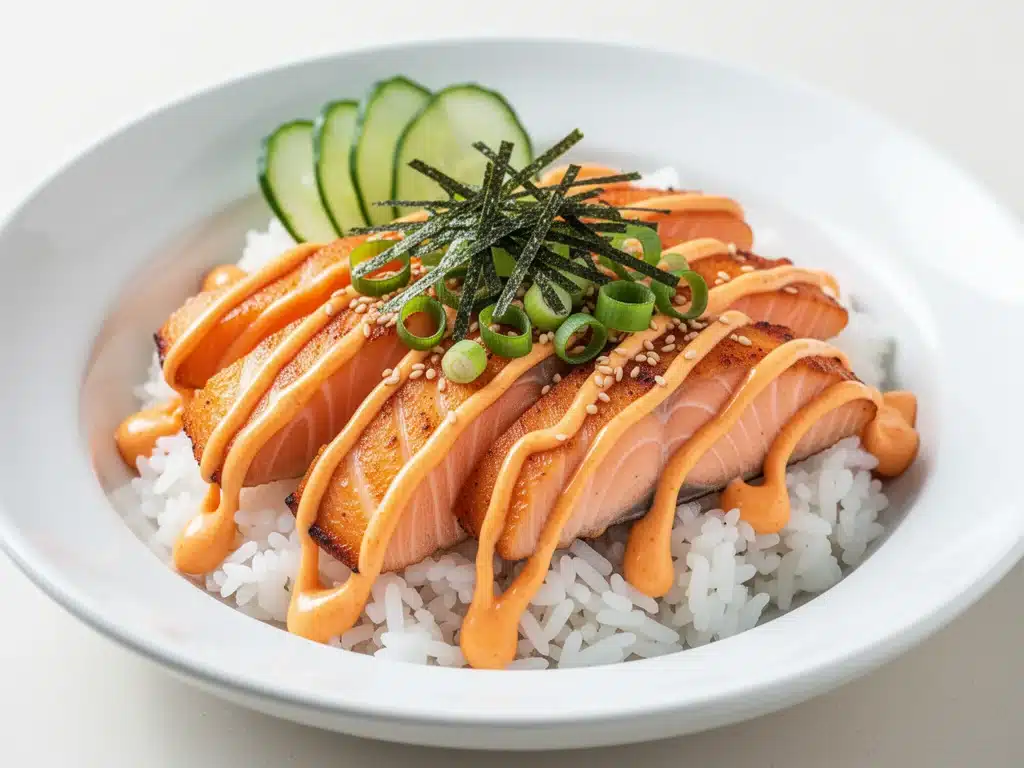
It was 6:45 PM on a Tuesday, and I was standing in front of an open refrigerator, staring into the abyss. You know the look. The light flickers, the leftover takeout containers are pushing against the back wall, and there’s that single, sad-looking salmon fillet that I bought three days ago with good intentions but zero execution plan. My kids were already complaining that they were “hangry” (which, let’s be honest, is just a fancy word for demanding), and I had exactly 20 minutes to make something that felt healthy, didn’t involve me cooking for three separate meals, and didn’t taste like cardboard.
That was the night I stopped trying to make “fancy” dinner and started making salmon rice bowls. Seriously. Not the complicated, multi-step, expensive salmon dishes I see on Pinterest that require four different sauces and a wine pairing. I’m talking about the simple, garlicky, spicy mayo-drenched salmon rice bowls that have become my absolute lifesaver.
I’ve made these salmon rice bowls at least fifty times in the last year. Fifty. That’s not an exaggeration. Some weeks it’s three times a week. And every single time, it saves me from the dreaded “what’s for dinner?” panic. The secret isn’t in the technique—it’s in the spicy mayo. Once you whisk up that simple sauce, everything else just falls into place. The salmon gets flaky and tender in the pan while the rice finishes steaming, and ten minutes later, you’ve got a meal that looks like it came from a trendy cafe but costs a fraction of the price and tastes like heaven.
Before these bowls, I was stuck in a rut. I’d either order UberEats (which always arrives cold) or make the same boring chicken stir-fry for the hundredth time. But these salmon rice bowls? They’re fast, they’re nutritious, and they actually make my kids eat vegetables without negotiating. Plus, the leftovers are incredible cold the next day for lunch. I’ve converted my skeptical husband, my picky eater, and even my neighbor who claims she “doesn’t have time to cook.” If you’re tired of the same old routine, you need to try this. It’s going to change your life, or at least your Tuesday nights.
Why You’ll Love This Salmon Rice Bowl Recipe
There are a million reasons to keep this salmon rice bowl recipe in your regular rotation, but let’s be real—you care about the ones that actually matter. You want dinner that doesn’t require a degree in culinary arts, ingredients you can find at any grocery store, and results that make your family ask for seconds. Here’s why this recipe has earned a permanent spot in my kitchen:
- Under 20 Minutes Total — I’m not kidding. The salmon cooks in 8-10 minutes, the rice takes about 15 minutes (mostly hands-off), and the spicy mayo takes 2 minutes to whisk. I’ve timed it. I’ve rushed it. I’ve made it while answering work emails. It always fits in the window. It’s my go-to when I walk in the door at 6:30 PM and need dinner on the table by 7:00 PM.
- One Pan, Less Cleanup — You only need one skillet for the salmon and one pot for the rice. That’s it. No baking sheets, no extra bowls, no complicated setups. I’m a huge fan of minimal cleanup because it means I spend more time with my family and less time scrubbing pans. If you can boil water and flip a fish, you can handle this.
- The Spicy Mayo is Game-Changing — I know, I know, “just mayo” sounds boring. But whisking up some mayo, sriracha, lime juice, and a touch of honey creates a sauce that is addictive. It’s creamy, tangy, spicy, and slightly sweet. I’ve served this sauce on everything from tacos to salads since I discovered it. It’s the kind of condiment that makes simple ingredients taste gourmet.
- Healthy Without Being Boring — This isn’t a sad salad. It’s packed with protein from the salmon, complex carbs from the rice, and healthy fats. But it doesn’t taste “diet-y.” It tastes rich and satisfying. My kids don’t even realize they’re eating a superfood until I tell them. They just know it’s delicious.
- Super Versatile — Ran out of salmon? Use shrimp or tofu. Out of rice? Quinoa or even lettuce wraps work. No sriracha? Use chili crisp or hot sauce. This recipe is a template, not a rigid rulebook. I’ve made variations with teriyaki, ginger-soy, and even a creamy avocado lime version. It’s forgiving and flexible.
- Budget-Friendly — Salmon can be pricey, but you don’t need fillets. I often buy salmon steaks or even frozen salmon fillets when they’re on sale. A pound of salmon feeds 3-4 people easily. When you break it down, it’s cheaper than takeout and healthier than fast food. Plus, you can stretch it with extra veggies like edamame or cucumber.
- Calories: 550
- Protein: 35g
- Carbs: 45g
- Fiber: 6g
- Sugar: 4g
- Fat: 25g
- Saturated Fat: 4g
- Cholesterol: 75mg
- Sodium: 650mg
This is the recipe I make when I want to feel like a good parent, a healthy eater, and a competent cook, all at once. It’s reliable, it’s tasty, and it just works.
Ingredients You’ll Need for Salmon Rice Bowls
Here’s the best part: you probably have most of these ingredients already. I’m not asking you to go on a special expedition to an Asian market for obscure spices. This is pantry-friendly cooking with a few fresh additions. Here’s exactly what you need and why I’m picky about certain items.
For the Salmon
Skinless salmon fillets (1.5 lbs / 680g) — I prefer wild-caught alaskan salmon for its flavor, but farmed is fine too and often more affordable. Look for fillets that are about 6 ounces each. If they’re thicker, just cook them a minute longer. Fresh is best, but frozen works if you thaw it properly in the fridge overnight.
Soy sauce (2 tablespoons / 30ml) — I use low-sodium soy sauce so I can control the saltiness. Regular soy sauce works, but you might need to reduce the salt elsewhere. Tamari is a great gluten-free alternative if that’s a concern for your family.
Minced garlic (3 cloves / about 1 tablespoon) — Yes, fresh garlic. Don’t use the jarred stuff for the salmon. It has a different flavor profile and can turn bitter when cooked. If you’re lazy, buy pre-peeled garlic cloves from the produce section—it saves peeling time.
Vegetable oil or avocado oil (1 tablespoon) — You need a high smoke point oil for searing. Avocado oil is my favorite because it’s neutral and healthy. Olive oil works too, but extra virgin can burn at high heat. Just use a light touch.
Salt and black pepper — To taste. I season the salmon generously before it hits the pan. It makes a huge difference in flavor.
For the Spicy Mayo
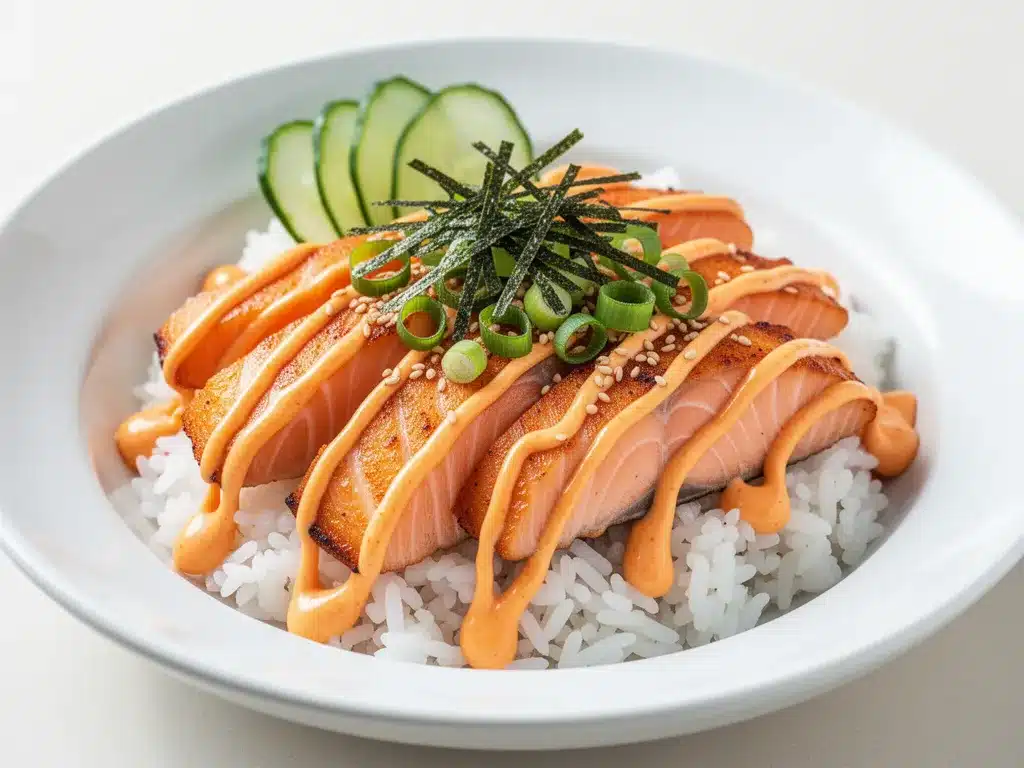
Mayonnaise (½ cup / 120g) — I use Japanese Kewpie mayo if I can find it. It’s richer and tangier than standard American mayo, which makes the sauce incredible. But regular Hellmann’s or Duke’s works fine if that’s what you have. Just don’t use light mayo; it’s too watery.
Sriracha sauce (2-3 tablespoons / 30-45ml) — This is the heat source. Start with 2 tablespoons if you’re sensitive to spice, then add more to taste. I like it hot, so I usually go with 3. Adjust based on your family’s tolerance.
Lime juice (1 tablespoon / 15ml) — Freshly squeezed is non-negotiable here. Bottled lime juice tastes like cleaning fluid and will ruin the sauce. Just squeeze one lime. It adds brightness that cuts through the richness of the mayo.
Honey (1 teaspoon / 5ml) — Just a touch to balance the heat and acidity. You won’t taste sweetness, just a rounded flavor. Skip it if you’re avoiding sugar, but I recommend it.
For the Bowls
Jasmine rice (1 cup uncooked / 185g) — Jasmine rice is sticky and fragrant, perfect for bowls. Short-grain sushi rice works too if you want it stickier. Long-grain rice is too dry and fluffy for this. You want it to cling together.
Cucumber (1 medium, sliced or diced) — Adds crunch and freshness. I like Japanese cucumbers because they’re less seedy, but any cucumber works. Peel it if the skin is thick.
Avocado (1 ripe, sliced) — Creamy, healthy fats. Essential. Make sure it’s ripe but not mushy. If it’s hard, put it in a paper bag with a banana for a few hours.
Edamame (½ cup, shelled) — I use frozen, thawed edamame. It’s easy to find in the frozen section and adds protein and color. You can skip this, but I never do.
Green onions (2-3, sliced) — For garnish and a mild onion bite. They look pretty and taste fresh. Scallions work too.
Sesame seeds (1 teaspoon) — Toasted sesame seeds add a nutty flavor and visual appeal. Optional but nice. You can buy them pre-toasted or toast them yourself in a dry pan for 2 minutes.
Common Substitutions
No sriracha? Use chili garlic sauce or hot sauce like Cholula. It’ll be different but still tasty.
Don’t like mayo? Try Greek yogurt mixed with a little mayo. It’s tangier and lighter.
Gluten-free? Just swap regular soy sauce for tamari. Everything else is naturally gluten-free.
Equipment You’ll Need
You don’t need fancy gadgets for this. Here’s what I actually use, and what you can swap if you don’t have it.
Non-stick skillet or cast iron pan — I use a 10-inch non-stick skillet. It’s the easiest for cooking salmon without sticking. Cast iron works great too if you’re experienced with it, but non-stick is more foolproof for beginners.
Saucepan with lid — For cooking the rice. Any standard 2-quart saucepan works. Make sure it has a tight-fitting lid to trap the steam.
Small mixing bowl — For whisking the spicy mayo. A ramekin or even a large mug works if you don’t want to wash another bowl.
Sharp knife and cutting board — For slicing the salmon and veggies. A dull knife makes this harder and more dangerous. Learn to sharpen it.
Rice cooker (optional but nice) — If you have a rice cooker, use it! It’s set-and-forget. But if you don’t, stovetop rice is fine. I’ll show you how in the steps.
Measuring spoons and cups — Standard stuff. Dollar store versions work fine for this.
How to Make Salmon Rice Bowls: Step-by-Step
Alright, let’s make this! I’m walking you through exactly how I do it, including the little tricks I’ve picked up over fifty+ makes. This is simple, but there are a few key moments that make or break the dish.
Step 1: Start the Rice (15-20 minutes)
Rinse your rice. Seriously, rinse it under cold water until the water runs clear. This removes excess starch and prevents the rice from being gummy. Then, combine 1 cup of rice with 1.5 cups of water in your saucepan. Bring it to a boil, then reduce to low heat, cover, and simmer for 15 minutes. Remove from heat and let it sit, covered, for 5 more minutes. Fluff with a fork. This timing is crucial. If you rush it, the rice will be crunchy. If you overcook it, it’ll be mush. Trust the clock.
Step 2: Whisk the Spicy Mayo (2 minutes)
While the rice cooks, make the sauce. In a small bowl, combine ½ cup mayo, 2-3 tablespoons sriracha, 1 tablespoon lime juice, and 1 teaspoon honey. Whisk until smooth and creamy. Taste it. If you want it spicier, add more sriracha. If it’s too thick, add a splash of lime juice. Set it aside. It can sit while you cook the salmon.
Step 3: Prep the Salmon (5 minutes)
Pat the salmon fillets dry with paper towels. This is important! Wet salmon steams instead of sears. Season both sides generously with salt and pepper. In a small bowl, mix 2 tablespoons soy sauce and 1 tablespoon minced garlic. Brush this mixture over the top side of the salmon (the side that won’t touch the pan first). Let it sit while you heat the pan.
Step 4: Cook the Salmon (8-10 minutes)
Heat 1 tablespoon oil in your skillet over medium-high heat. Once the oil shimmers, place the salmon skin-side down (or presentation-side down) in the pan. Press it down gently with a spatula for 10 seconds to prevent curling. Cook for 4-5 minutes without moving it. You want a nice crust. Flip the salmon carefully. Cook for another 3-4 minutes, or until the salmon flakes easily with a fork and reaches an internal temperature of 145°F (63°C). If the fillets are thick, you might need a minute more. Don’t overcook it, or it’ll be dry.
Step 5: Assemble the Bowls (3 minutes)
Divide the fluffy rice among 3-4 bowls. Flake the cooked salmon into large chunks and place it on top of the rice. Arrange sliced cucumber, avocado, and edamame around the salmon. Drizzle the spicy mayo generously over everything. Sprinkle with sliced green onions and sesame seeds. That’s it. Serve immediately while the salmon is hot and the rice is warm.
Troubleshooting Tips: If the salmon sticks, your pan wasn’t hot enough. If it’s dry, you cooked it too long. If the rice is too wet, you used too much water. If the sauce is too spicy, add more mayo or lime.
Expert Tips & Tricks for Perfect Bowls
Here’s everything I’ve learned from making this dozens of times. These tips will save you from my mistakes.
Don’t Skip the Rinse — Rinsing the rice is non-negotiable. It changes the texture entirely. Unrinsed rice is gummy and sticky in a bad way. Rinsed rice is fluffy and distinct. I learned this the hard way with a pot of glue-like rice that my kids refused to eat.
Let the Salmon Rest — After cooking, let the salmon rest for 2 minutes before flaking. This allows the juices to redistribute. If you cut into it immediately, all the moisture escapes, and you get dry fish.
Toast Your Sesame Seeds — Raw sesame seeds are bland. Toast them in a dry pan for 2 minutes until they smell nutty. It takes 30 seconds but adds so much flavor. It’s the difference between “okay” and “amazing.”
Use Fresh Lime — Bottled lime juice is acidic and artificial. Fresh lime juice is bright and floral. It balances the heavy mayo and salty soy sauce. Don’t skimp on this.
Adjust the Heat — Sriracha heat levels vary by bottle. Taste your sauce before you drizzle it. If it’s too hot, add more mayo. If it’s too mild, add more sriracha. You want it to have a kick, but not burn your tongue.
Prep Your Veggies First — Have everything sliced and ready before you start cooking the rice. Things move fast, and you don’t want to be peeling an avocado while the rice is boiling.
Don’t Overcrowd the Pan — If cooking multiple fillets, don’t crowd the skillet. Cook in batches if needed. Crowding steams the fish instead of searing it.
Variations & Substitutions
Once you’ve nailed the basic version, here’s how you can mix it up. I’ve tried all of these.
Teriyaki Version — Swap the soy sauce/garlic mix for teriyaki sauce. Add ginger to the rice. Top with pickled ginger instead of cucumber.
Shrimp Version — Use large shrimp instead of salmon. Cook them for 2-3 minutes per side. Same sauce, different protein. Kids love this one.
Tofu Version — Press and cube extra-firm tofu. Pan-fry until crispy. Marinate in soy sauce and garlic before cooking. Great vegetarian option.
Spicy Tuna Version — Use sushi-grade tuna, mix with mayo and sriracha, and scoop onto rice. No cooking required. Very authentic.
Low-Carb Version — Skip the rice. Use cauliflower rice. Sauté it with a little garlic and soy sauce. Same flavors, fewer carbs.
Gluten-Free Version — Use tamari instead of soy sauce. Everything else is naturally gluten-free. Just check your sriracha label (most are GF).
Serving & Storage
How to Serve: I serve these straight from the prep bowls. It’s casual and fun. Put the spicy mayo in a squeeze bottle for easy drizzling. Add extra sriracha on the side for those who want it hotter.
Side Dishes: These bowls are complete on their own. But if you want more, add miso soup, seaweed salad, or steamed broccoli. I usually keep it simple with just the bowl.
Storage: Store leftovers in an airtight container in the fridge for up to 3 days. The rice will harden, so you’ll need to reheat it.
Reheating: Microwave the rice with a splash of water for 1-2 minutes to rehydrate it. Reheat the salmon gently for 30 seconds, or eat it cold (salmon is great cold). The avocado should be eaten fresh, so add that after reheating.
Freezing: I don’t recommend freezing these. The avocado and mayo don’t freeze well. The rice freezes okay, but the texture changes. Make it fresh for best results.
Nutrition Information
I’m not a nutritionist, but here’s the breakdown if you’re tracking. This is an estimate per bowl (based on 4 servings).
What’s Good: High in protein and omega-3s from the salmon. Good fiber from the veggies and rice. Healthy fats from avocado and mayo.
What to Know: Higher in sodium due to soy sauce and mayo. Use low-sodium soy sauce and light mayo to reduce. The calories are moderate, but it’s a filling meal.
Final Thoughts
So that’s my go-to salmon rice bowl! I’ve probably talked your ear off at this point, but when you make a recipe this often, you have a lot to say about it. This has saved weeknight dinners more times than I can count. It’s my answer to “what’s for dinner” when I’m tired, don’t want takeout, and still want something that tastes really good. My kids are happy, my husband’s happy, and I’m happy because I’m not stressed about cooking.
Make it yours! Try different add-ins, swap in your favorite vegetables, adjust the spice level. The best recipes are the ones you adapt to your family’s tastes. If you make this, drop a comment and let me know what you think! I love hearing how recipes turn out in your kitchen. And if something doesn’t work, tell me that too—I’m here to help troubleshoot.
Happy cooking! And I hope your kitchen smells half as good as mine does right now.
Frequently Asked Questions
Can I use frozen salmon?
Yes, absolutely. Just thaw it properly in the fridge overnight. If you’re in a rush, thaw it in a bowl of cold water. Pat it very dry before cooking. Frozen salmon can be watery, so extra drying is key to getting a good sear.
Why did my salmon stick to the pan?
Usually, the pan wasn’t hot enough, or the salmon was wet. Make sure your pan is hot before adding oil, and pat the salmon dry with paper towels. Also, don’t try to move it while it’s cooking. Let it sear for 4-5 minutes, and it will release naturally.
Can I make the spicy mayo ahead of time?
Yes! The spicy mayo actually tastes better after sitting for an hour as the flavors meld. Store it in an airtight container in the fridge for up to 3 days. Stir it before using.
What kind of rice is best?
Jasmine rice is my favorite for its fragrance and texture. Short-grain sushi rice is also good if you want it stickier. Avoid long-grain rice like basmati, as it’s too dry and fluffy for bowls.
Can I use pre-cooked rice?
You can, but fresh rice tastes better. If you use pre-cooked rice, just heat it up with a splash of water in the microwave or steamer. Don’t skip the seasoning; add a little soy sauce or sesame oil to the rice for extra flavor.
Is this recipe kid-friendly?
Yes! My kids love it. The spicy mayo is mild (adjust the sriracha to taste), and the flavors are familiar. If your kids are sensitive to spice, use just 1 teaspoon of sriracha or mix half mayo, half ketchup for a “spicy ketchup” version.
Can I double this recipe for meal prep?
Absolutely. Double the rice and salmon. Cook the salmon in batches if your pan is small. Store the components separately in the fridge. Assemble fresh each day to keep the avocado from browning.
Pin This Recipe!
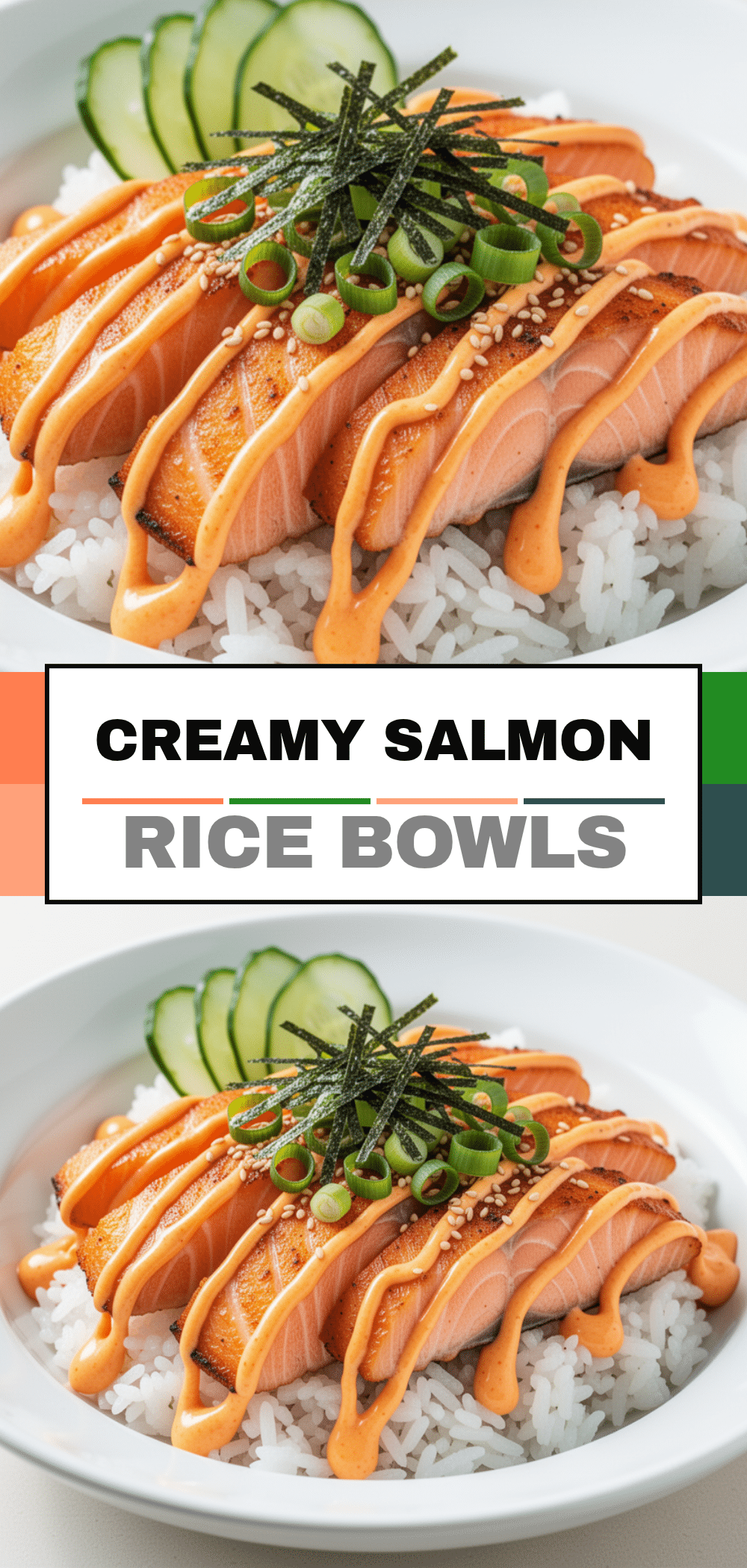
Salmon Rice Bowls: 5-Min Spicy Mayo Recipe
- Total Time: 25 minutes
- Yield: 4 servings 1x
Description
A quick and healthy weeknight dinner featuring pan-seared salmon, fluffy jasmine rice, and a creamy spicy mayo sauce, ready in under 20 minutes.
Ingredients
- 1.5 lbs skinless salmon fillets
- 1 cup jasmine rice (uncooked)
- 1.5 cups water (for rice)
- 2 tablespoons soy sauce (low-sodium or tamari)
- 3 cloves garlic, minced
- 1 tablespoon vegetable oil or avocado oil
- Salt and black pepper to taste
- ½ cup mayonnaise (Japanese Kewpie preferred)
- 2–3 tablespoons sriracha sauce
- 1 tablespoon lime juice (freshly squeezed)
- 1 teaspoon honey
- 1 medium cucumber, sliced or diced
- 1 ripe avocado, sliced
- ½ cup shelled edamame (frozen, thawed)
- 2–3 green onions, sliced
- 1 teaspoon toasted sesame seeds
Instructions
- Rinse 1 cup of jasmine rice under cold water until the water runs clear to remove excess starch.
- Combine the rinsed rice and 1.5 cups of water in a saucepan. Bring to a boil, then reduce heat to low, cover, and simmer for 15 minutes.
- Remove from heat and let sit, covered, for 5 more minutes. Fluff with a fork.
- While rice cooks, whisk together ½ cup mayo, 2-3 tablespoons sriracha, 1 tablespoon lime juice, and 1 teaspoon honey in a small bowl. Set aside.
- Pat salmon fillets dry with paper towels. Season both sides with salt and pepper.
- Mix 2 tablespoons soy sauce and minced garlic. Brush this mixture over the top side of the salmon (the side that won’t touch the pan first).
- Heat 1 tablespoon oil in a skillet over medium-high heat. Once oil shimmers, place salmon skin-side down in the pan.
- Press gently with a spatula for 10 seconds to prevent curling. Cook for 4-5 minutes without moving to create a crust.
- Flip salmon carefully and cook for another 3-4 minutes, or until internal temperature reaches 145°F and fish flakes easily.
- Divide cooked rice among 3-4 bowls.
- Flake cooked salmon into large chunks and place on top of the rice.
- Arrange cucumber, avocado, and edamame around the salmon.
- Drizzle generously with spicy mayo. Sprinkle with green onions and sesame seeds. Serve immediately.
Notes
Rinsing the rice is crucial to prevent gumminess. Pat salmon dry before cooking to ensure a good sear. Let salmon rest for 2 minutes after cooking to redistribute juices. Toast sesame seeds in a dry pan for 2 minutes for better flavor. Use fresh lime juice for best results.
- Prep Time: 10 minutes
- Cook Time: 15 minutes
- Category: Main Course
- Cuisine: Asian Fusion
Nutrition
- Serving Size: 1 bowl
- Calories: 550
- Sugar: 4
- Sodium: 650
- Fat: 25
- Saturated Fat: 4
- Carbohydrates: 45
- Fiber: 6
- Protein: 35
Keywords: salmon rice bowls, spicy mayo, quick dinner, healthy meals, weeknight dinner, one pan meal, gluten-free option


