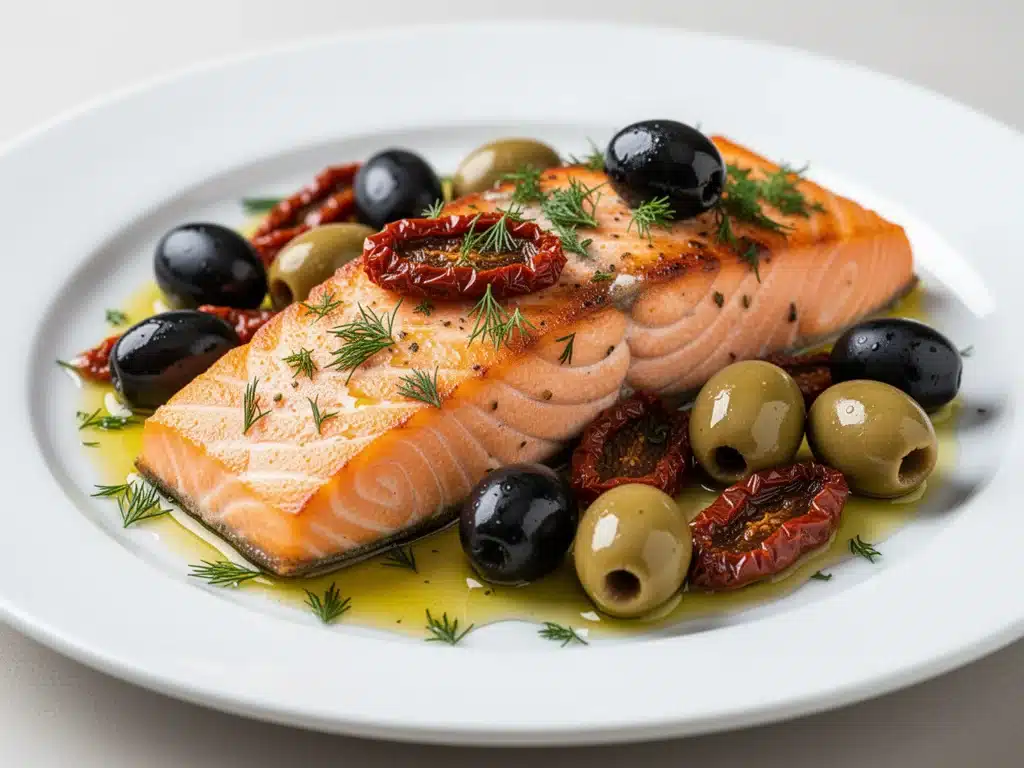
Last Tuesday, I came home from work feeling like my brain had been put through a blender. You know that feeling? The kind where you stare into the open refrigerator, hoping a healthy meal will magically appear, but all you find is half a lemon, some sad spinach, and a beautiful piece of salmon that’s been sitting in the crisper drawer for two days.
I was tired. I was hungry. And I was absolutely not in the mood to chop vegetables for twenty minutes or wait for an oven to preheat. I wanted dinner. I wanted it fast. And I wanted it to taste like I’d actually tried, even though I had five minutes to spare.
That’s when I remembered a dish I’d seen on a travel blog years ago—something involving olives, lemon, and garlic. It sounded simple. Too simple, maybe. But desperate times call for desperate measures, so I threw the salmon in a pan, tossed in some kalamata olives I had leftover from a salad, squeezed that lemon, and added a handful of fresh oregano. I didn’t even measure anything.
Fifteen minutes later, I sat down to eat, and I nearly cried. It was bright, salty, savory, and incredibly fresh. It tasted like a vacation. It tasted like I’d spent hours simmering a sauce, when really, I’d just let the fish steam in its own juices with a little olive oil and olives.
This Mediterranean Salmon with Olives became my emergency rescue recipe that night. Since then, I’ve made it at least a dozen times. It’s become my go-to for those “I’m too tired to think” evenings, but also for when I want to impress guests without looking like I’m sweating in the kitchen. It’s the perfect balance of healthy and indulgent, salty and fresh, and it comes together faster than you can order takeout.
If you’re looking for a weeknight dinner that feels gourmet but requires zero effort, this is it. Seriously. Once you try this, you’ll wonder why you ever complicated your life with complex marinades and long cook times.
Why You’ll Love This Mediterranean Salmon with Olives
There’s a reason this recipe has earned a permanent spot in my weekly rotation. It’s not just about speed (though 15 minutes is pretty hard to beat). It’s about the flavor profile that hits every single note on your palate.
Stupid Simple
I mean this literally. If you can put a pan on the stove and press a button on your lemon squeezer, you can make this. There’s no chopping onions, no making a roux, no complex sauce reduction. You throw everything in, you cook it, you eat it. My teenage daughter made this for me last weekend while I was napping, and it turned out perfect. That’s the level of foolproof we’re talking about.
Ready in 15 Minutes Flat
From the moment you turn on the burner to the moment you plate up, it’s 15 minutes. Active cooking time is maybe 10 minutes. The rest is just waiting for the fish to cook through. This is my savior on Wednesdays when I’m running late from soccer practice or just too exhausted to deal with anything complex.
Pantry-Friendly Ingredients
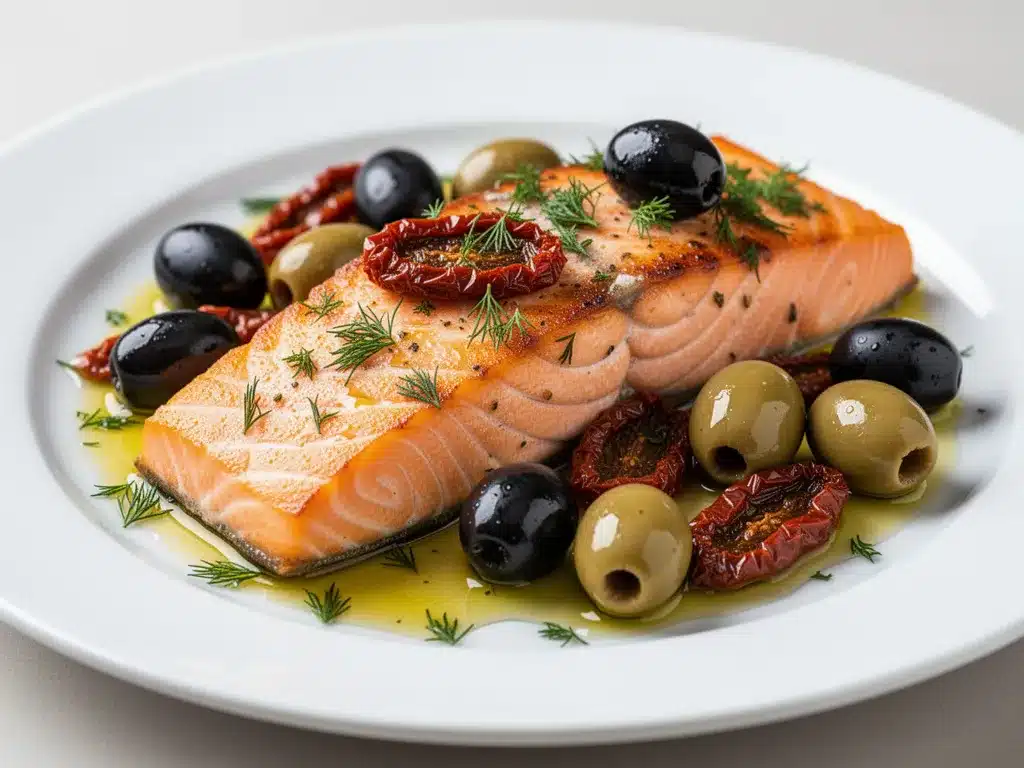
You probably have 80% of these ingredients already. Salmon (obviously), olive oil, lemon, garlic, and olives. If you keep a jar of kalamata olives in your fridge—which I always do, because they’re amazing on cheese boards—you’re halfway to dinner. The rest is basic herbs and spices.
Bright and Flavorful
Most healthy dinners feel bland. This one doesn’t. The briny kick of the olives cuts through the richness of the salmon, the lemon adds a zesty brightness that wakes up your tongue, and the garlic adds warmth. It’s a flavor explosion in every bite. I’ve served this to picky eaters, and even they couldn’t complain about the taste.
Healthy Without Being “Diet” Food
This is packed with omega-3s, lean protein, and healthy fats. But it doesn’t taste like “diet food.” It tastes like a restaurant meal. You’re not sacrificing flavor for health here; you’re getting both. It’s nourishing, but it satisfies that craving for something rich and savory.
This is my answer to “what’s for dinner?” when I want to feel good about what I’m eating but still want to feel like I’m treating myself. It’s reliable, delicious, and incredibly satisfying.
Ingredients You’ll Need for Mediterranean Salmon with Olives
Here’s the best part: this recipe relies on high-quality ingredients because there’s nowhere to hide. The flavors are bold and simple, so you want the good stuff. But don’t worry, you don’t need to go to a specialty store for anything.
For the Salmon:
Salmon fillets (4 pieces, about 6 ounces each) — I prefer wild-caught sockeye or atlantic salmon for their firm texture and rich flavor. Look for fillets that are about 1-inch thick so they cook evenly in this short time. If your fillets are very thin, reduce the cook time by a minute.
Extra virgin olive oil (3 tablespoons) — This is your cooking fat and your flavor base. Use a good quality oil here. It’ll be the backbone of the sauce. I keep a bottle of mild extra virgin olive oil for cooking and a fancy one for finishing, but for this, a solid mid-range one works perfectly.
Kalamata olives (½ cup, pitted and halved) — These are non-negotiable for me. They have that deep, fruity, briny flavor that defines this dish. Green olives work too, but they’re sharper and less complex. If you can’t find kalamata, use a good quality black olive.
Garlic (3 cloves, minced) — Fresh garlic is essential. Jarred garlic just doesn’t have the same punch in a quick pan-sear. Mince it finely so it distributes evenly and doesn’t burn.
Lemon (1 large, juiced and zested) — You need both the juice and the zest. The zest adds aromatic oils that lemon juice alone can’t provide. Use a microplane or fine grater for the zest. One large lemon usually gives you about 3 tablespoons of juice, which is what you need.
Dried oregano (1 teaspoon) — Mediterranean flavor comes from oregano. Dried is actually better here because it toasts in the oil and releases its flavor. Fresh oregano works too, but add it at the very end so it doesn’t wilt away.
Red pepper flakes (½ teaspoon, optional) — Just a pinch adds a subtle warmth that balances the saltiness of the olives. I always use it, but skip it if you’re sensitive to spice.
Salt and black pepper — To taste. Use kosher salt for seasoning the fish.
For Garnish (Optional but Recommended):
Fresh parsley (2 tablespoons, chopped) — Adds a fresh, green finish that brightens the dish visually and flavor-wise.
Lemon wedges — For serving. Let everyone squeeze their own extra lemon if they like it extra zesty.
Ingredient Notes:
Can I use canned salmon? Not really. This recipe relies on the texture of a fresh fillet. Canned salmon falls apart too easily in this method. Stick to fresh.
What if I don’t have kalamata olives? Use green olives, but rinse them well to remove some of the sharp brine. You might want to add a tiny pinch of sugar to balance it.
Gluten-free? Yes! This recipe is naturally gluten-free. Just make sure your olives and spices are certified gluten-free if you have celiac disease.
Equipment Needed
You don’t need a fancy kitchen to make this. Here’s what I actually use.
Large skillet — I use a 12-inch stainless steel skillet. It needs to be large enough to fit all four salmon fillets in a single layer without crowding. If your fillets are overlapping, cook them in two batches. Crowding steams the fish instead of searing it, and we want that nice crust.
Spatula — A thin, flexible metal spatula is best for flipping delicate fish. Silicone works too, but metal gives you better control.
Zester or microplane — For getting that lemon zest. A regular grater works, but a microplane gives you finer zest that melts into the sauce better.
Lemon squeezer — Not strictly necessary, but it saves your hands. If you don’t have one, just use your hands and a fork. No judgment here.
Measuring spoons — For the oregano and red pepper flakes. Precision matters a little here so the flavors balance.
Knife and cutting board — For chopping the garlic and parsley, and halving the olives.
Paper towels — To pat the salmon dry before cooking. This is crucial for a good sear.
Small bowl — For mixing the olive oil, lemon juice, and zest before pouring over the fish.
How to Make Mediterranean Salmon with Olives: Step-by-Step
Alright, let’s make this! It’s so simple, I’m almost worried I’m making it sound too easy. But that’s the beauty of this dish.
Step 1: Prep the Salmon (2 minutes)
Pat the salmon fillets dry with paper towels. This seems like a small step, but drying the fish is the secret to getting a nice sear instead of steamed fish. Season both sides generously with salt and black pepper. Set aside on a plate.
Step 2: Make the Marinade Base (1 minute)
In a small bowl, whisk together the olive oil, lemon zest, lemon juice, minced garlic, dried oregano, and red pepper flakes. It should look like a bright, fragrant liquid. Set aside.
Step 3: Sear the Salmon (4-5 minutes)
Heat a large skillet over medium-high heat. Add a tiny splash of olive oil to the pan. Once the oil is shimmering but not smoking, place the salmon fillets in the pan, skin-side down (if skin-on) or presentation-side down (if skinless). Press down gently with the spatula for the first 10 seconds to prevent curling. Cook undisturbed for 4-5 minutes. You’ll see the color change from translucent pink to opaque orange as it cooks up the side. Do not flip yet!
Step 4: Add the Olives and Sauce (1 minute)
Flip the salmon fillets over. Immediately pour the olive oil-lemon mixture over the fish. Toss the halved kalamata olives into the pan around the fish. The sauce will bubble and sizzle. Reduce heat to medium-low.
Step 5: Finish Cooking (3-4 minutes)
Let the salmon cook in the sauce for another 3-4 minutes. Baste the fish occasionally by spooning the pan juices over the top. The fish is done when it flakes easily with a fork and reaches an internal temperature of 145°F. The sauce will have reduced slightly and coated the fish in a glossy, savory glaze.
Step 6: Garnish and Serve (1 minute)
Remove from heat. Sprinkle with fresh chopped parsley. Serve immediately with lemon wedges on the side. Spoon any remaining sauce from the pan over the top of the fish.
Total Time: 15 minutes (5 minutes prep, 10 minutes cook)
Troubleshooting Tips:
Fish sticking to the pan? Your pan wasn’t hot enough before you added the fish. Make sure it’s properly preheated. Also, don’t try to flip it until it releases naturally.
Sauce too thin? If you want a thicker sauce, let it simmer for an extra minute after flipping the fish. The liquid will reduce.
Garlic burning? Keep an eye on the garlic when you add the sauce. If it starts to brown, lower the heat immediately. Burnt garlic tastes bitter.
Expert Tips & Tricks
Here’s everything I’ve learned from making this dozens of times. These tips will save you from my mistakes.
Don’t Skip the Drying Step
I know it’s annoying, but patting the salmon dry is non-negotiable. Wet fish = steamed fish. You want that nice, slightly crisp exterior. If the fish is wet, the oil splatters, and the sear doesn’t happen. Just take the extra 30 seconds.
Use Room Temperature Salmon
If you pull the salmon straight from the fridge, it cooks unevenly. Take it out 10-15 minutes before cooking. If you forget, just let it sit on the counter while you prep the other ingredients. It makes a huge difference in how evenly it cooks.
Baste, Don’t Just Pour
When you add the sauce, don’t just pour it and walk away. Spoon it over the fish repeatedly. This bastes the top of the fillet, keeping it moist and infusing it with flavor. It’s the difference between good salmon and great salmon.
Choose Your Olives Wisely
Kalamata olives are best because they’re meaty and not too salty. If you use smaller, saltier olives, rinse them well. You don’t want the whole dish to be overly salty. Taste a olive before you add it if you’re unsure.
Reserve Some Lemon Zest
I usually zest the lemon over the fish after cooking, not just in the sauce. The fresh zest adds a burst of aroma that cooking dulls slightly. It makes the dish smell incredible when you bring it to the table.
Variations & Substitutions
Once you’ve nailed the basic version, here’s how you can mix it up. I’ve tried all of these.
Shrimp Version
Use large shrimp instead of salmon. Cook time is much shorter—2-3 minutes per side. Add the olives and sauce in the last minute. It’s just as good, if not faster.
White Fish Version
Use cod, halibut, or sea bass. These firmer white fish work well. Reduce cook time by 1-2 minutes since they’re more delicate. Watch closely so you don’t overcook them.
Vegetarian Tofu Version
Use firm tofu, pressed and sliced into thick slabs. Pan-fry the tofu first until golden, then add the sauce and olives. Let it simmer for 2-3 minutes to absorb the flavors. It’s surprisingly satisfying.
Herb Swap
Instead of oregano, try fresh thyme or dill. Dill goes especially well with salmon and lemon. It gives a different but equally delicious profile.
Spicy Kick
Add a pinch of cayenne pepper to the sauce, or use spicy olives if you can find them. It adds a nice heat that pairs well with the cool lemon.
Dietary Modifications:
Low-Carb/Keto: This is naturally low-carb. Serve over cauliflower rice or zucchini noodles instead of pasta or rice.
Dairy-Free: This is naturally dairy-free. Just ensure your olives don’t have any cheese rind added during processing (rare, but happens).
Serving & Storage
How to serve this delicious salmon.
How to Serve:
I usually serve this straight from the skillet at the dinner table—it looks rustic and stays warm. But here are other ways I’ve enjoyed it:
Over Rice or Quinoa: Spoon the sauce and olives over fluffy rice or quinoa. It soaks up all that delicious lemon-olive goodness.
With Roasted Vegetables: Serve alongside roasted asparagus, broccolini, or zucchini. The flavors complement each other perfectly.
In a Salad: Flake the salmon over a big green salad with cherry tomatoes and cucumber. Drizzle the pan juices over the top.
With Pita Bread: Tear up some warm pita bread and use it to scoop up the olives and sauce. It’s like eating a dip.
Storage Instructions:
Refrigerator: Store leftovers in an airtight container for up to 2 days. The fish will keep well, but the texture might change slightly.
Reheating: Gently reheat in a skillet over low heat with a splash of water or broth. Do not microwave, as it will make the fish rubbery. If you must microwave, do it in short bursts and cover with a damp paper towel.
Freezing: I don’t recommend freezing this dish. The olives and sauce don’t freeze well, and the salmon texture suffers. Make it fresh whenever you crave it.
Meal Prep:
You can prep the sauce and olives ahead of time and store in the fridge. Cook the salmon fresh when you’re ready to eat. This saves about 5 minutes of active time.
Nutrition Information
I’m not a nutritionist, but here’s the breakdown if you’re tracking.
Per serving (based on 4 servings):
- Calories: 320
- Protein: 34g
- Carbs: 4g
- Fiber: 1g
- Sugar: 1g
- Fat: 18g
- Saturated Fat: 3g
- Cholesterol: 85mg
- Sodium: 420mg
- Omega-3s: High
What’s Good: High in protein and omega-3s, low in carbs, rich in healthy fats from olive oil. It’s a nutrient-dense meal that keeps you full.
What to Know: Sodium content comes from the olives. If you’re watching sodium, rinse the olives well or use low-sodium varieties. Use less oil if you’re calorie-counting.
My Take: This is healthy food that doesn’t taste like it. You’re getting heart-healthy fats and lean protein without sacrificing flavor. It’s a win-win.
Final Thoughts
So that’s my Mediterranean Salmon with Olives! I know I’ve talked a lot about how simple it is, but that’s the point. When you’re tired, you want food that works. You want something that tastes amazing but doesn’t require a degree in culinary arts.
This recipe has saved me on more weeknights than I can count. It’s my answer to “I don’t want to cook” when I still want to eat well. My family loves it, my friends ask for the recipe, and I make it just for myself when I need a little comfort food that’s also good for me.
Make it yours! Try different herbs, swap the olives for capers, or add some sun-dried tomatoes. The best recipes are the ones you adapt to your tastes. But honestly, the classic version is hard to beat.
If you make this, drop a comment and let me know what you think! I love hearing how recipes turn out in your kitchen. And if something doesn’t work, tell me that too—I’m here to help troubleshoot.
Happy cooking! I hope your kitchen smells as amazing as mine does right now.
Frequently Asked Questions
Can I use frozen salmon?
Yes, but you must thaw it completely first. Pat it very dry. Frozen salmon releases more water, so you might need to cook it a minute longer. Fresh salmon is always better for this recipe, but frozen works in a pinch.
Why did my salmon stick to the pan?
Usually, the pan wasn’t hot enough when you added the fish, or the fish was wet. Make sure your skillet is preheated and the salmon is patted dry. Once it sears, it releases naturally. Don’t force it!
Can I make this in the oven?
Yes! Preheat oven to 400°F. Place salmon in a baking dish, pour sauce and olives over top, and bake for 12-15 minutes. It’s easier for cleanup, but you won’t get the nice sear from the skillet.
What if I don’t have kalamata olives?
Use green olives, black olives, or even capers. Green olives are sharper, so rinse them. Capers add a different briny flavor but work well. Just avoid mild, watery olives.
How do I know when the salmon is done?
It should flake easily with a fork and be opaque throughout. The internal temperature should be 145°F. If you’re unsure, cut into the thickest part—it should be pink in the center but not raw.
Can I add vegetables to this?
Absolutely! Sauté some cherry tomatoes or spinach in the pan before adding the salmon. Or toss in some artichoke hearts with the olives. It adds bulk and nutrition.
Is this recipe gluten-free?
Yes, it’s naturally gluten-free. Just check your olives and spices to ensure they’re certified gluten-free if you have celiac disease.
Pin This Recipe!
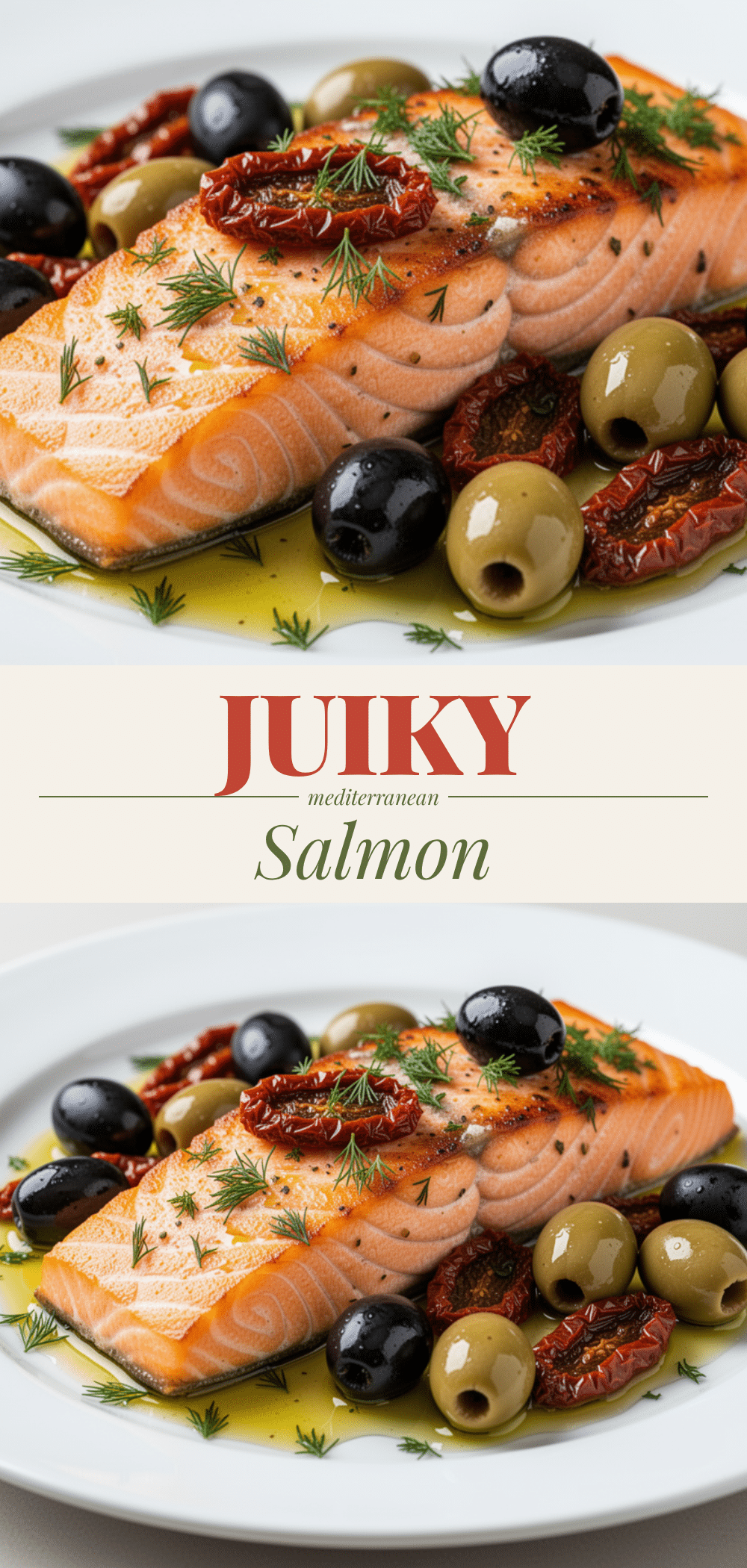
Mediterranean Salmon with Olives
- Total Time: 15 minutes
- Yield: 4 servings 1x
Description
A quick, 15-minute healthy dinner featuring pan-seared salmon with kalamata olives, lemon, garlic, and oregano. This foolproof recipe delivers restaurant-quality flavor with minimal effort.
Ingredients
- 4 salmon fillets (about 6 ounces each)
- 3 tablespoons extra virgin olive oil
- 1/2 cup kalamata olives, pitted and halved
- 3 cloves garlic, minced
- 1 large lemon (juiced and zested)
- 1 teaspoon dried oregano
- 1/2 teaspoon red pepper flakes (optional)
- Salt and black pepper to taste
- 2 tablespoons fresh parsley, chopped (for garnish)
- Lemon wedges (for serving)
Instructions
- Pat the salmon fillets dry with paper towels and season both sides generously with salt and black pepper.
- In a small bowl, whisk together the olive oil, lemon zest, lemon juice, minced garlic, dried oregano, and red pepper flakes.
- Heat a large skillet over medium-high heat with a splash of olive oil. Once shimmering, place salmon fillets in the pan, skin-side down. Press gently for 10 seconds to prevent curling.
- Cook undisturbed for 4-5 minutes until the color changes from translucent to opaque. Do not flip yet.
- Flip the salmon fillets over. Immediately pour the olive oil-lemon mixture over the fish and toss the halved kalamata olives into the pan around the fish.
- Reduce heat to medium-low and cook for another 3-4 minutes, basting occasionally with pan juices. The fish is done when it flakes easily with a fork and reaches an internal temperature of 145°F.
- Remove from heat, sprinkle with fresh chopped parsley, and serve immediately with lemon wedges on the side.
Notes
Patting the salmon dry is crucial for a good sear. Use room temperature salmon for even cooking. If using green olives instead of Kalamata, rinse them well to reduce saltiness. Do not microwave leftovers as it makes the fish rubbery; reheat gently in a skillet.
- Prep Time: 5 minutes
- Cook Time: 10 minutes
- Category: Main Course
- Cuisine: Mediterranean
Nutrition
- Serving Size: 1 salmon fillet with
- Calories: 320
- Sugar: 1
- Sodium: 420
- Fat: 18
- Saturated Fat: 3
- Carbohydrates: 4
- Fiber: 1
- Protein: 34
Keywords: salmon, kalamata olives, lemon, garlic, quick dinner, healthy recipe, gluten-free, keto, weeknight dinner, one-pan meal


